
Boschniakia rossica
Boschniakia rossica
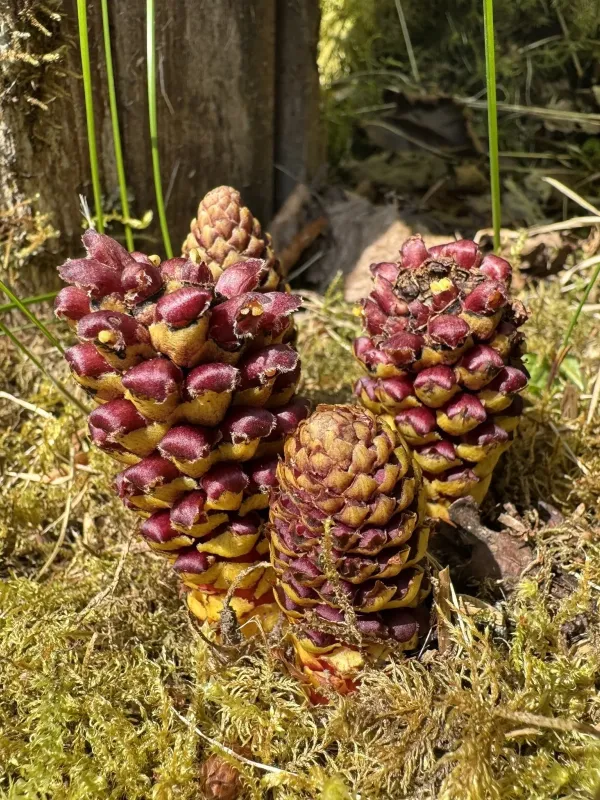
Description
Growing requirements
Boschniakia rossica, commonly known as the northern groundcone, is a distinctive parasitic plant belonging to the Orobanchaceae family. As a holoparasite, it lacks chlorophyll and cannot perform photosynthesis, relying entirely on a host plant for nutrients.
The plant typically parasitizes the roots of woody species, primarily from the Betulaceae family, such as alders and birches. It attaches to the host roots using specialized organs called haustoria, which penetrate the host's vascular system to extract water and carbohydrates.
It is found in subarctic and temperate regions across the Northern Hemisphere, including Siberia, the Russian Far East, Japan, and North America. It thrives in forest ecosystems where the host trees are abundant and the soil conditions are suitable for root development.
Climate and soil requirements for this species are inseparable from the needs of its host trees. It generally prefers damp, shaded forest environments with stable soil moisture, as these conditions are optimal for the maintenance of the host's active root system.
Because of its obligate parasitic nature, Boschniakia rossica is not grown as an agricultural crop. Its life cycle depends on complex chemical signaling between the parasite and the host, making artificial cultivation outside of natural habitats extremely challenging.
Harvesting
The economic use of Boschniakia rossica is primarily limited to its historical role in traditional medicine. Indigenous cultures in northern regions have utilized the plant's aerial stems for their potential tonic and adaptogenic properties.
Harvesting is performed by hand in the wild during the flowering season. Due to the slow growth rate of the population, sustainable harvesting practices are essential to avoid depleting the natural stock, which may take years to recover.
The collected stems are typically dried in cool, ventilated areas. Careful drying is necessary to preserve the heat-sensitive bioactive compounds, including phenylethanoid glycosides and iridoids, which are responsible for its medicinal profile.
Current pharmacological interest focuses on studying the plant's compounds for potential application in modern medicine, particularly for antioxidant and anti-inflammatory formulations. However, it remains a wild-harvested resource rather than a cultivated commodity.
Conservation is a key aspect of managing this species, as it is a rare and ecologically significant component of boreal and temperate forests. Its survival is tied to the health of the host forests and the stability of the natural environment.