
Boschniakia hookeri
Boschniakia hookeri
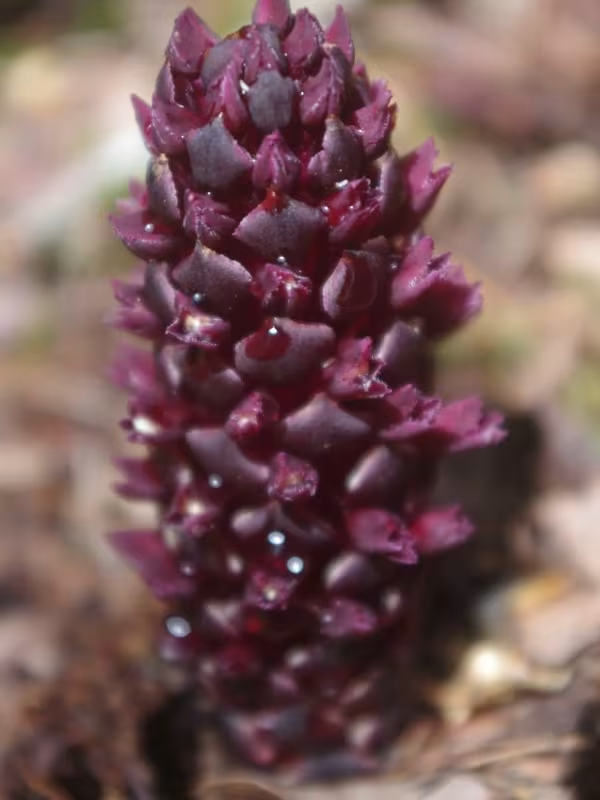
Description
Growing requirements
Boschniakia hookeri, commonly known as the Vancouver groundcone, is a specialized holoparasitic plant belonging to the Orobanchaceae family. Lacking chlorophyll, this plant depends entirely on a host for carbon and nutrients.
The native range of this plant extends along the Pacific Coast of North America, from Alaska to California. It thrives in coniferous forests and coastal scrub environments where its primary hosts are abundant.
The plant requires a specific symbiotic relationship with host species, most notably Arctostaphylos (manzanita) and Gaultheria. It uses specialized structures called haustoria to penetrate the host root system.
Due to its parasitic nature, it has no commercial agricultural cultivation methods. It is strictly an ecological component of wild plant communities rather than a cultivated crop.
Environmental conditions must include well-drained, humus-rich soils and a stable, cool forest microclimate. It is highly sensitive to the removal of ground cover and disturbance of the forest floor.
Main diseases and pests
The primary threat to Boschniakia hookeri is habitat destruction. Deforestation and land development directly lead to the loss of host species, which the parasite cannot survive without.
Climate change poses a significant risk by altering forest soil moisture levels, which are critical for the survival of the plant's seeds and emerging shoots.
Invasive plant species can outcompete native host plants, leading to a decline in the availability of suitable hosts necessary for the survival of the parasite population.
Changes in soil chemistry due to pollution or excessive nitrogen deposition can disrupt the delicate haustorial connection between the parasite and its host.
Increased human traffic in forest areas can lead to soil compaction, which hinders the root growth of host plants and consequently limits the viability of the Boschniakia hookeri colonies.