
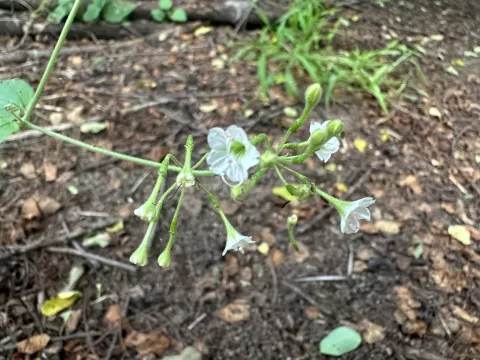
Commicarpus
Commicarpus
Commicarpus belongs to the Nyctaginaceae family and consists of perennial herbs or semi-shrubs. In commercial production, sowing seeds is recommended once the soil has warmed up and the risk of frost has passed.
What the section contains
 Commicarpus ambiguus
Commicarpus ambiguus
Commicarpus ambiguus
 Commicarpus boissieri
Commicarpus boissieri
Commicarpus boissieri
 Commicarpus chinensis
Commicarpus chinensis
Commicarpus chinensis
 Commicarpus decipiens
Commicarpus decipiens
Commicarpus decipiens
 Commicarpus grandiflorus
Commicarpus grandiflorus
Commicarpus grandiflorus
 Commicarpus helenae
Commicarpus helenae
Commicarpus helenae
 Commicarpus pentandrus
Commicarpus pentandrus
Commicarpus pentandrus
 Commicarpus plumbagineus
Commicarpus plumbagineus
Commicarpus plumbagineus
 Commicarpus scandens
Commicarpus scandens
Commicarpus scandens
 Commicarpus sinuatus
Commicarpus sinuatus
Commicarpus sinuatus
Commicarpus
The optimal time for the beginning of the growth phase is spring, when daily temperatures consistently exceed 18–20 degrees Celsius. Providing proper soil drainage during the germination phase is critical to prevent seed rot.
Propagation can also be carried out via stem cuttings, which helps preserve the desirable characteristics of the parent plant. Cuttings should be placed in a substrate enriched with sand to improve aeration.
When growing in the open field, maintaining adequate spacing between plants is necessary to prevent overcrowding and the subsequent spread of fungal diseases. A spacing of at least 40 cm between plants is recommended.
Pre-planting soil preparation is essential; tilling the soil and incorporating organic matter ensures vigorous seedling establishment and healthy subsequent development.
This plant exhibits strong adaptability to arid conditions common in tropical and subtropical regions. It prefers well-lit areas with full exposure to sunlight throughout the day.
The crop has moderate soil requirements but performs best in well-draining sandy or loamy soils with a neutral to slightly alkaline pH level.
Irrigation should be moderate, as the plant is capable of storing moisture; persistent waterlogging is detrimental and can lead to severe root decay.
A crucial factor for success is temperature management, as Commicarpus is highly sensitive to freezing temperatures and cold-induced root damage.
To support robust biomass production, applying balanced organic fertilizers at the beginning of the active growing season is highly recommended.
The primary threats to Commicarpus include pests typical of hot climates, such as spider mites and aphids, which frequently target young stems and leaves.
Excessive humidity in the root zone can trigger phytophthora and other fungal infections, which spread rapidly in conditions of poor air circulation.
To manage pest populations, the use of biological insecticides is advised, as they effectively control harmful insects while maintaining environmental safety standards.
Preventative disease management involves strict irrigation control and regular weeding, as weeds often act as vectors for viruses and other pathogens.
In cases of severe fungal infestation, application of systemic fungicides in accordance with local agricultural guidelines is necessary to mitigate crop loss.
The commercial use of Commicarpus is frequently linked to its application in traditional medicine and its utility as forage in regions where it is native.
For medicinal purposes, the aerial parts of the plant are harvested during the peak flowering stage, when the concentration of bioactive compounds is at its highest.
Stems should be cut with a sharp tool, leaving a portion of the plant to allow for regrowth, and immediately transferred to a shaded, well-ventilated area for drying.
Roots, which contain specific biological properties, are harvested in the autumn, thoroughly cleaned of soil, and washed before being processed.
Proper harvest techniques and careful drying procedures ensure the retention of the plant's valuable properties throughout its storage period.