
Commicarpus plumbagineus
Commicarpus plumbagineus
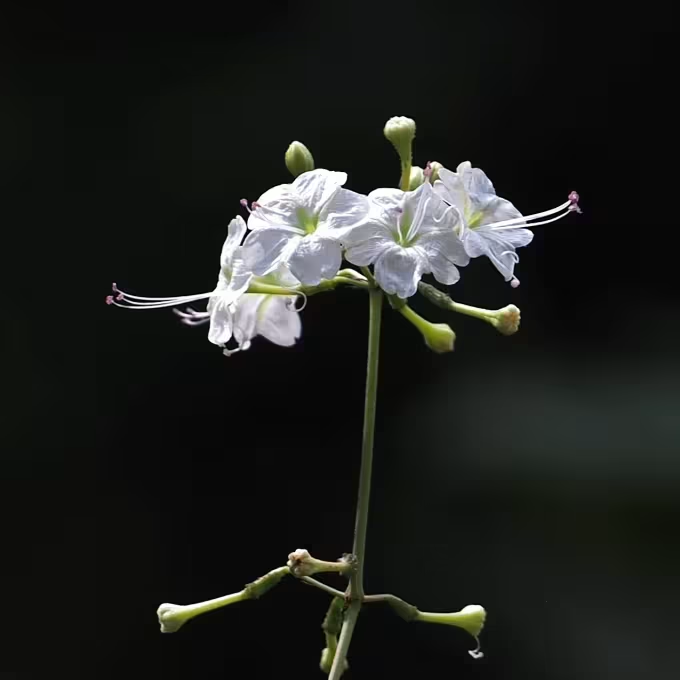
Description
Growing requirements
Commicarpus plumbagineus, a member of the Nyctaginaceae family, is a perennial herb or subshrub native to arid and semi-arid regions of Africa and parts of the Middle East. It is well-adapted to high-heat environments and poor, rocky, or sandy substrates.
The plant exhibits a sprawling growth habit, often requiring support to reach its full size. Its botanical features include small, sticky glandular flowers and opposite, ovate leaves that help it manage transpiration under intense solar radiation.
Optimal growth requires full sun exposure and well-drained soils with low organic content. Excessive moisture is the primary physiological stressor for this species, making it unsuitable for areas with high rainfall or heavy, water-retentive clays.
Agronomic management focuses on drought-tolerant practices. In regions where it is cultivated for specific medicinal or ecological purposes, irrigation should only be supplementary to prevent root asphyxiation.
The plant's root system is adapted to penetrate deep into the substrate, allowing it to survive long periods of drought. This makes it a potential candidate for ecological stabilization projects in arid environments.
Main diseases and pests
Root rot is the most significant pathological threat to Commicarpus plumbagineus. It is almost exclusively caused by overwatering or poor drainage management in the field, leading to rapid decay of the vascular tissues.
Insect pests such as aphids and spider mites can colonize the foliage during humid spells. These infestations are typically managed through biological control agents or targeted horticultural soaps rather than systemic pesticides.
Fungal leaf spots can occur when the microclimate around the plant becomes too humid. Ensuring adequate air circulation between individual plants is the most effective preventative measure against such diseases.
Soil-borne nematodes are a potential issue when the plant is grown continuously on the same plot. Crop rotation or the use of sterile soil media is recommended for nursery-scale production.
Competition from aggressive, fast-growing weeds during the initial establishment phase is a critical challenge. Hand weeding or mulching with inert materials is preferred to avoid damaging the shallow root crowns of young specimens.