
Commicarpus ambiguus
Commicarpus ambiguus
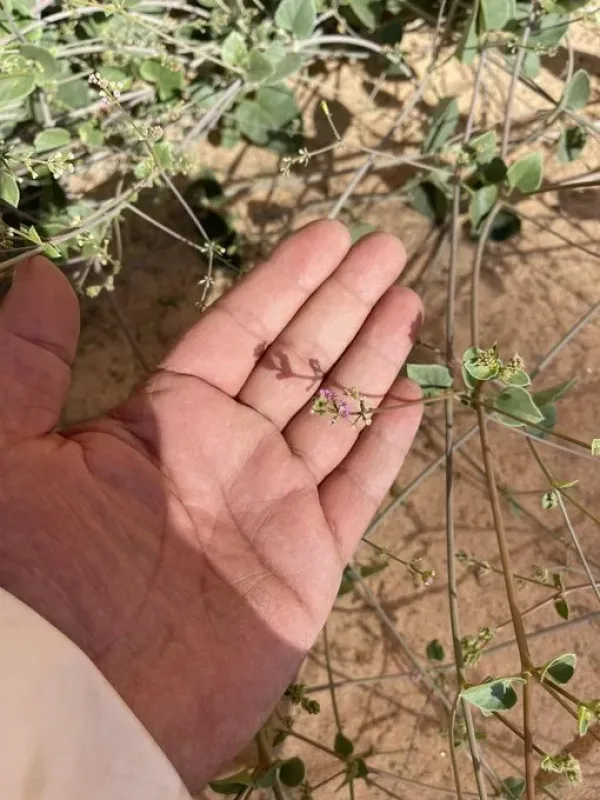
Description
Growing requirements
Commicarpus ambiguus is a herbaceous perennial plant belonging to the Nyctaginaceae family. This species is notably adapted to harsh, arid environments, exhibiting high resilience to thermal stress and irregular moisture patterns common in its native Australian habitats.
Botanically, the plant features sprawling, decumbent stems that can spread across the ground, often rooting at the nodes to establish a dense mat. The leaves are generally heart-shaped to ovate, possessing a texture that minimizes water loss through transpiration, which is crucial for survival in arid conditions.
Agricultural success with this species depends on selecting well-drained, sandy-textured soils. The plant does not tolerate heavy, waterlogged clay soils, which can lead to root decay. Optimal growth is achieved in soils with high aeration and low organic matter content, mimicking its natural ecological niche.
In terms of climatic requirements, the plant thrives under full sunlight and requires warm growing seasons to complete its life cycle effectively. While it is highly drought-tolerant, supplementary irrigation during the early establishment phase can significantly improve biomass production and coverage density.
The primary agricultural utility of Commicarpus ambiguus lies in land restoration and soil conservation projects. Its creeping growth habit makes it an excellent candidate for stabilizing sandy surfaces and reducing wind erosion, providing a sustainable solution for managing semi-arid landscape degradation.