
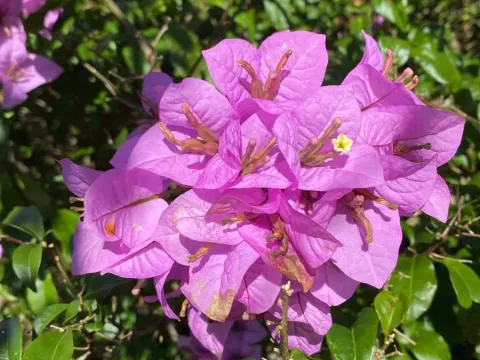
Bougainvillea
Bougainvillea Comm. ex Juss.
Bougainvillea is a genus of thorny ornamental vines and shrubs belonging to the Nyctaginaceae family. Native to South America, specifically Brazil, Peru, and Argentina, these plants are widely cultivated across tropical and subtropical regions. In agricultural settings, they are highly valued for their vibrant, paper-like bracts surrounding small flowers.
What the section contains


Bougainvillea
The crop requires full, direct sunlight to bloom effectively. In commercial greenhouse production, high irradiance is crucial for plant architecture development. If grown in low-light conditions, the plants become leggy and fail to produce the intense coloration characteristic of the species.
Temperature management is vital, as Bougainvillea is highly frost-sensitive. Optimal temperatures for robust growth range from 20°C to 30°C. In regions with cool winters, the plants must be managed in climate-controlled environments or moved to frost-free facilities to ensure year-round vitality.
Soil requirements dictate a well-draining, slightly acidic medium with a pH between 5.5 and 6.0. The root system is delicate and prone to waterlogging; therefore, the use of coarse materials such as perlite or expanded clay in the potting mix is highly recommended for professional nursery production.
Agrotechnical practices involve scheduled pruning to maintain shape and encourage flowering on new growth. Nitrogen fertilization should be carefully regulated to prevent excessive vegetative growth, while periodic applications of potassium and phosphorus are essential to support the prolific production of bracts.
Pests such as mealybugs, aphids, and spider mites are common concerns in indoor cultivation. These sucking insects can cause severe stress to the plant, necessitating integrated pest management (IPM) strategies, including biological control or targeted applications of systemic insecticides.
Root rot, primarily caused by species of Phytophthora and Pythium, poses a significant risk to Bougainvillea. Overwatering is the leading factor in disease development, highlighting the necessity of proper irrigation management and the use of sterile growing substrates.
Leaf spot caused by fungal pathogens such as Cercospora can occur when humidity levels remain high for extended periods. Improving airflow and keeping the foliage dry are primary cultural methods used to prevent the proliferation of these leaf pathogens in a production environment.
Chlorosis, usually caused by iron deficiency, is a frequent issue in soil with high pH levels. This is typically addressed by applying chelated iron supplements or lowering the soil pH using specific acidifying amendments to improve nutrient availability for the plant.
Bacterial blight and various viral infections can occasionally impact the crop, leading to distorted growth and reduced market value. Strict hygiene practices, such as sanitizing pruning tools between plants, are essential to prevent the spread of pathogens throughout the greenhouse facility.