
Commicarpus sinuatus
Commicarpus sinuatus
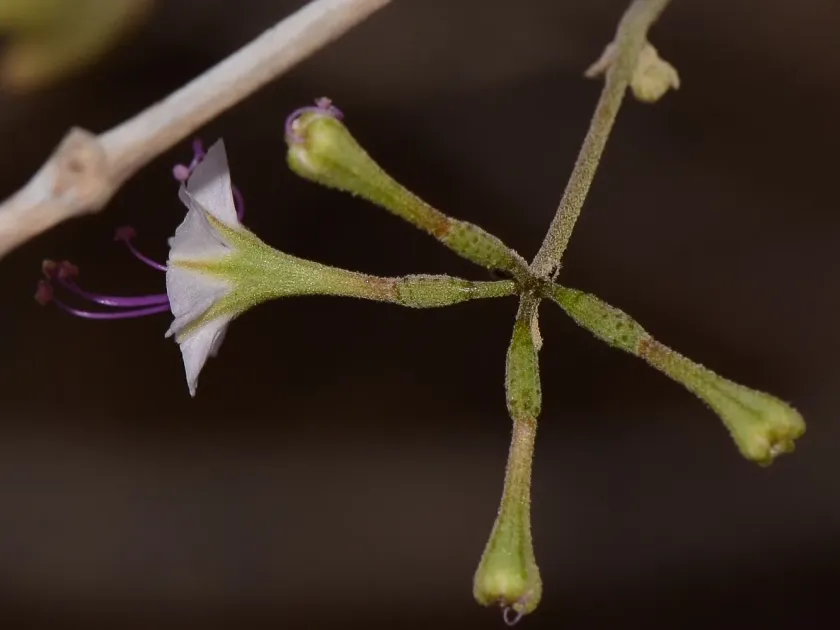
Description
Growing requirements
Commicarpus sinuatus is a perennial herb belonging to the Nyctaginaceae family. It is native to the arid and semi-arid regions of East and Southern Africa, where it has evolved to thrive in harsh environments characterized by low moisture and intense sunlight.
The plant features distinct stems and leaves with sinuate, or wavy, margins, which are diagnostic of the species. Its morphology is highly specialized for water conservation, allowing it to survive in regions where other crops would fail to establish due to environmental stress.
Successful cultivation requires well-drained, sandy-textured soils that allow for efficient oxygen exchange in the root zone. Heavy, clay-rich soils should be avoided as they promote root rot, which is the most significant physiological threat to the plant's health in cultivation.
Climatic requirements focus on high solar radiation and warm temperatures. Ideally, the plant prefers zones where the ambient temperature remains between 22°C and 30°C during the active growing season to ensure optimal photosynthetic activity and biomass production.
In terms of agricultural application, this species is increasingly recognized for its potential in xeriscaping and soil stabilization. Its deep roots help prevent erosion in arid landscapes, making it a valuable candidate for environmental restoration projects in subtropical areas.