
Commicarpus scandens
Commicarpus scandens
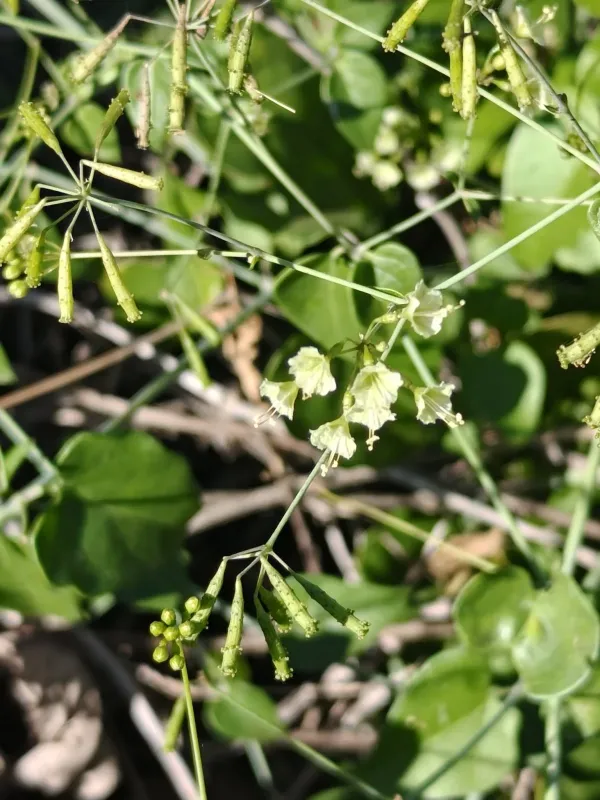
Description
Sowing dates
Commicarpus scandens is a perennial plant typically propagated via seeds, which should be sown in a warm, well-ventilated environment during the early spring season.
The seeds require consistent temperatures between 22 and 26 degrees Celsius to achieve optimal germination rates within the nursery stage.
It is recommended to plant the seeds in a sandy, fertile substrate, covering them lightly to ensure proper contact with the soil while maintaining consistent moisture.
Seedlings are sensitive to transplanting, so it is often advised to use biodegradable pots if individual starters are intended for later field or garden installation.
Proper spacing between plants is crucial, as the species tends to sprawl and climb, requiring sufficient air circulation to prevent developmental stunting.
Growing requirements
As a member of the Nyctaginaceae family, this species thrives in tropical climates and requires full sunlight to partial shade for healthy biomass production.
The soil should be well-draining, as the plant is highly susceptible to root rot if water stagnation occurs, even for a short duration during the growing season.
It prefers a soil pH range from 6.0 to 7.5 and benefits from a moderate supply of organic matter to support its rapid vegetative growth and climbing habit.
Climate-wise, the plant is intolerant to frost and requires a stable, warm environment, making it suitable for protected cultivation in temperate regions.
Since the stems are naturally weak and vining, providing trellis systems or vertical supports is an essential agronomic practice to maximize yield and plant health.
Main diseases and pests
In humid conditions, Commicarpus scandens can be prone to fungal infections, particularly powdery mildew, which manifests as a white, powdery coating on the foliage.
Insect pests such as spider mites and aphids are known to feed on the tender leaves, which can reduce the plant's overall vigor if left untreated.
Root pathogens associated with excessive soil moisture pose the most significant risk, often leading to rapid collapse of the stems and root tissues.
Integrated pest management strategies should focus on monitoring for early signs of infestation and maintaining appropriate plant hygiene to prevent the spread of diseases.
- Regular monitoring of leaves for pest clusters.
- Optimized irrigation to maintain soil aeration.
- Mechanical removal of infected plant debris.