
Commicarpus helenae
Commicarpus helenae
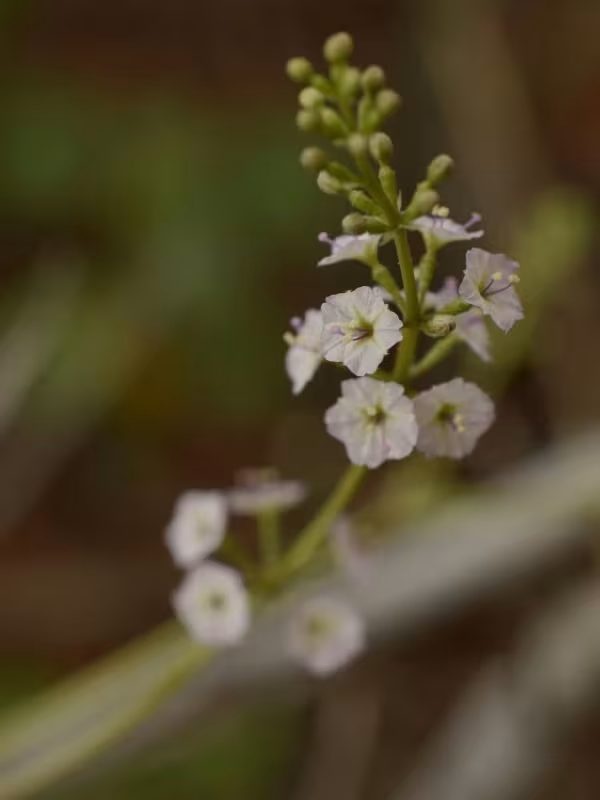
Description
Growing requirements
Сommicarpus helenae is a member of the Nyctaginaceae family, recognized primarily for its adaptability to arid and semi-arid environments. Originating from specific regions in Africa, it serves as a resilient perennial herbaceous plant or subshrub.
The plant demonstrates significant drought tolerance, thriving in regions where water is a limiting factor for traditional crops. It excels in well-drained, sandy, or loamy soil profiles where waterlogging is prevented, as its roots are prone to decay under excessive moisture.
Optimal development of this species requires high levels of solar radiation. Full-sun exposure is essential for maintaining robust growth, while shade typically results in sparse foliage and reduced overall vigor of the plant during the growing season.
The thermal requirements for Сommicarpus helenae are centered on warm climates. It performs best under consistently high temperatures, though it remains sensitive to frost and extreme cold, which can cause severe damage to the plant's structural integrity.
Effective management includes maintaining wide row spacing to promote air circulation. This agricultural practice is critical for preventing the onset of fungal diseases, which can become prevalent if the microclimate around the plant becomes too humid.
Harvesting
The economic utility of Сommicarpus helenae is largely focused on its role as a sustainable forage crop. In marginal lands where conventional grasses fail to produce sufficient biomass, this plant offers a viable alternative for livestock feed.
Harvesting for forage involves precise timing to ensure the highest nutritional value. Cutting should be performed when the biomass is lush and before the stems transition into a woody state, which reduces digestibility for grazing animals.
Seed harvesting is a more specialized process. Because the seeds often mature asynchronously, producers must monitor the field closely. Careful manual or mechanical harvesting is required to mitigate losses associated with premature seed detachment.
Post-harvest management involves drying the collected seeds or biomass in well-ventilated areas to prevent spoilage. Proper moisture regulation is key to maintaining the viability of seeds for future planting cycles or for storage as high-quality forage.
The crop's ability to regenerate quickly after cutting makes it a valuable asset for multiple harvests within a single growing season, provided that soil moisture levels are managed efficiently and soil fertility is maintained through balanced fertilization.