
Tococa guianensis
Tococa guianensis
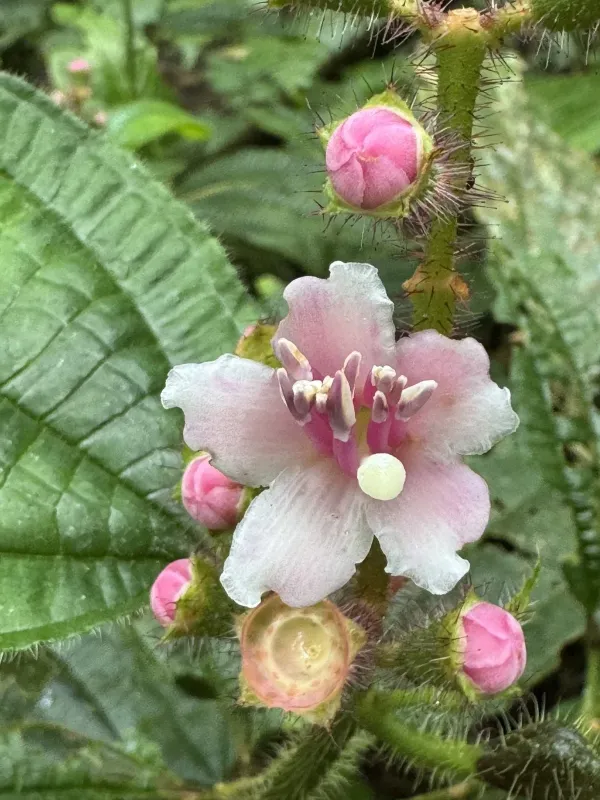
Description
Growing requirements
Tococa guianensis is a shrub belonging to the Melastomataceae family. Native to tropical regions of Central and South America, it thrives in humid environments such as forest edges, riverbanks, and secondary growth forests, forming part of the dense understory vegetation.
The climate requirements for this species are strict, necessitating consistently warm temperatures and high atmospheric humidity. It lacks cold tolerance, meaning cultivation is restricted to tropical or controlled greenhouse environments where temperatures rarely drop below 20 degrees Celsius.
Regarding soil, Tococa guianensis prefers fertile, well-draining, and slightly acidic substrates. It is essential to ensure that the soil medium provides adequate aeration, as the root system is highly susceptible to rot if water stagnation occurs in the substrate.
A distinctive botanical feature of this species is the presence of domatia—swollen structures located at the base of the leaf blades. These serve as specialized housing for mutualistic ants, which, in return, offer the plant protection against various herbivores and fungi.
Cultivation requires bright but indirect light conditions. Intense direct sunlight can cause significant tissue damage to the foliage, so maintaining a light intensity that mimics the dappled sunlight of a rainforest floor is critical for optimal plant health and development.
Main diseases and pests
The primary pests affecting this plant include spider mites, which flourish in dry conditions. These pests damage the foliage by piercing the cells, leading to a loss of vigor and potential leaf drop if the infestation remains unmanaged.
Fungal diseases, specifically leaf spot pathogens and root rot, represent significant threats under conditions of high humidity combined with poor airflow. Ensuring proper spacing between plants is essential to maintain a healthy microclimate.
Poor drainage is a constant risk factor, as it leads to root asphyxiation and subsequent colonization by soil-borne pathogens. Monitoring the substrate's moisture levels is a key component of effective plant husbandry for this species.
Disruption of the ant-plant symbiosis can increase susceptibility to insect pests. Chemical interventions meant to control pests often kill the symbiotic ants, which might actually lead to higher pest pressure in the long term.
Regular inspection of the leaf underside is recommended to identify early signs of scale insects or mealybugs. Early detection allows for physical removal, minimizing the need for chemical applications that could harm the plant's beneficial ant inhabitants.