
Miquel's Linden
Tilia miqueliana
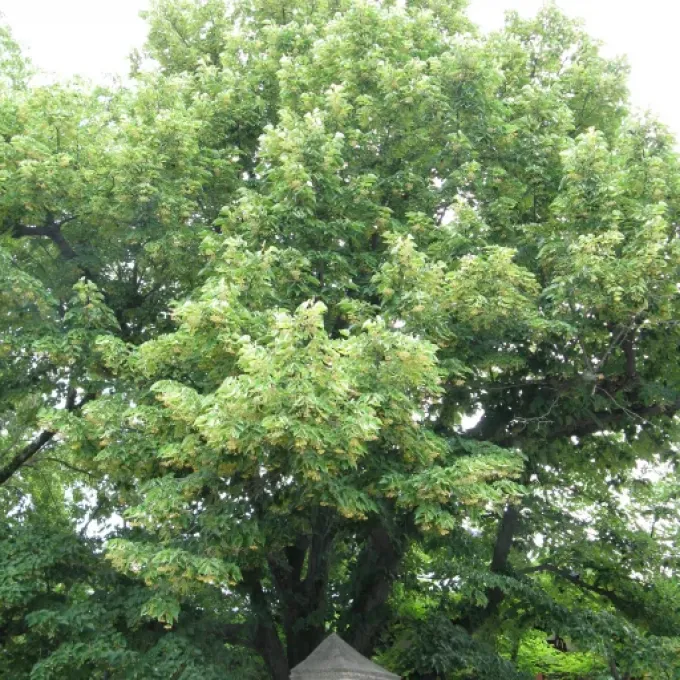
Description
Sowing dates
Propagation of Tilia miqueliana is typically achieved through seeds or vegetative cuttings. Seeds require a cold stratification period of three to six months to break dormancy before planting.
Seeds should be sown in a well-drained, nutrient-rich potting mix. Consistent moisture is essential during the germination phase to ensure a high success rate among the seedlings.
Vegetative propagation uses semi-hardwood cuttings taken in late spring. These are treated with rooting hormones and kept in a high-humidity environment until they establish a strong root system.
Transplanting into the permanent garden site is best performed in early spring. The tree should be planted at the same depth as it was in the nursery to prevent root decay.
Young trees benefit from a layer of organic mulch around the base, which helps retain moisture and provides a slow release of nutrients during the growing season.
Growing requirements
Miquel's Linden belongs to the Malvaceae family and is recognized for its graceful, heart-shaped leaves and fragrant flowers. It prefers deep, moist, and slightly acidic loamy soils.
While it is a hardy species, it thrives in temperate climates. Providing protection from harsh winter winds is advisable, especially for specimens that are not yet fully established.
The tree thrives in full sun but appreciates partial shade, especially in regions with intense afternoon heat. Adequate spacing is necessary to allow for optimal air circulation.
Regular watering is essential, particularly during the first few years after planting. During severe droughts, supplemental irrigation should be provided to maintain tree health.
Fertilization with a balanced, slow-release fertilizer in early spring supports healthy canopy growth and enhances the tree's natural resistance to environmental stress.
Yield
This tree is highly valued as an exceptional honey plant. The flowers bloom in mid-summer, attracting a vast array of pollinators and contributing to high-quality honey production.
In landscaping, it serves as a superb specimen tree for large gardens and public parks due to its attractive, symmetrical form and silver-toned foliage.
The wood is lightweight and easy to carve, making it a preferred material for craftsmen working on intricate wood carvings and lightweight furniture pieces.
Beyond its economic uses, the tree enhances soil health through leaf litter decomposition, contributing essential minerals back into the earth, thus promoting a healthy micro-ecosystem.
Professional pruning practices can significantly enhance the floral yield by promoting dense canopy growth and ensuring that the tree remains structurally sound over time.
Main diseases and pests
Common pests include aphids and mites, which can cause leaf curling and early senescence if left unmanaged. Integrated pest management strategies are highly recommended.
Fungal infections, such as leaf spot, may occur in humid environments with poor air circulation. Proper spacing during planting is the best preventive measure against these issues.
Regular inspections of the foliage, especially the undersides of leaves, help in identifying pest outbreaks at an early stage, allowing for targeted and localized interventions.
Avoid overhead irrigation, which can exacerbate fungal development on the leaves. Drip irrigation or watering at the base is much safer for the plant's overall health.
Maintaining a healthy, stress-free tree through regular care and proper site selection remains the most effective defense against the majority of diseases affecting this species.