
Rough malvastrum
Malvastrum scabrum
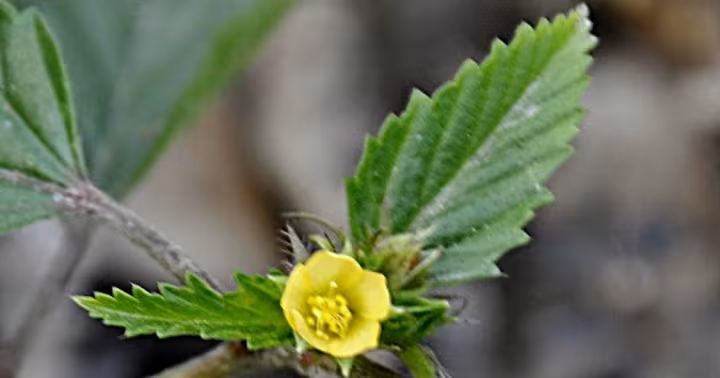
Description
Growing requirements
Rough malvastrum (Malvastrum scabrum) is a persistent herbaceous perennial belonging to the Malvaceae family. Known for its rugged nature, this plant has adapted to a wide range of environments, thriving particularly well in regions where other forage crops might struggle due to limited moisture.
The plant excels in well-drained, sandy-loam soils with a neutral pH profile. Its deep, robust taproot system allows it to access sub-surface water reserves, significantly enhancing its drought tolerance during the peak summer heat when other vegetation may enter dormancy.
Success in cultivating Malvastrum scabrum depends heavily on exposure to full sunlight. It is a heliophilous species; therefore, any degree of shade will directly result in reduced photosynthetic activity, stunted growth, and a marked decline in biomass yield per acre.
In terms of temperature, this crop flourishes in environments where the growing season averages between 20 and 30 degrees Celsius. While it is tolerant of heat, seedlings require consistent soil warmth to establish their initial root architecture before the plant becomes fully hardy.
Agricultural management should focus on maintaining a clean seedbed free of aggressive weeds during the first year of establishment. Once matured, the crop's natural density provides a competitive advantage, effectively shading out smaller weeds and reducing the need for chemical intervention.
Harvesting
The primary agricultural utility of rough malvastrum lies in its role as a sustainable forage source. It provides a balanced nutritional profile for livestock, particularly when harvested at the optimal vegetative stage before the plant redirects its energy into heavy seed production.
Harvesting strategies typically involve mechanical cutting during the early flowering phase. This timing is critical to ensure that the harvested biomass maintains high palatability and protein levels, which are essential for animal weight gain and health maintenance throughout the winter.
Beyond its traditional use as livestock feed, the fibrous stems of Malvastrum scabrum offer potential in the bio-industrial sector. The fibers can be extracted and utilized in the creation of biodegradable packaging materials or as a filler in specialized composite boards.
Sustainable management requires careful stubble height regulation. By leaving sufficient plant matter above the crown, the producer ensures that the plant retains enough photosynthetic capacity for rapid regrowth, allowing for multiple harvests within a single growing season.
Efficient post-harvest processing, such as rapid drying or ensiling, is recommended to preserve the forage quality. Proper handling ensures that the structural integrity of the plant is maintained, maximizing the overall feed value and marketability of the harvested material.