
Hoheria lyallii
Hoheria lyallii
Description
Growing requirements
Hoheria lyallii, commonly known as mountain lacebark, is a deciduous shrub or small tree belonging to the Malvaceae family. It is native to the South Island of New Zealand, where it typically inhabits mountain scrub and forested areas.
To successfully cultivate Hoheria lyallii, gardeners must provide well-drained, nutrient-rich soil. The plant thrives in environments that mimic its natural habitat, requiring soil that is moist yet not waterlogged, as its roots are susceptible to rot in stagnant conditions.
Climate requirements include a sheltered position with partial to full sun. While this species is more cold-hardy than many of its relatives, it performs best in regions where extreme temperature fluctuations are minimized during the growing season.
Agricultural management requires consistent irrigation, particularly during the establishment phase and prolonged dry spells. Applying organic mulch around the base of the shrub helps regulate soil temperature and retain necessary moisture levels.
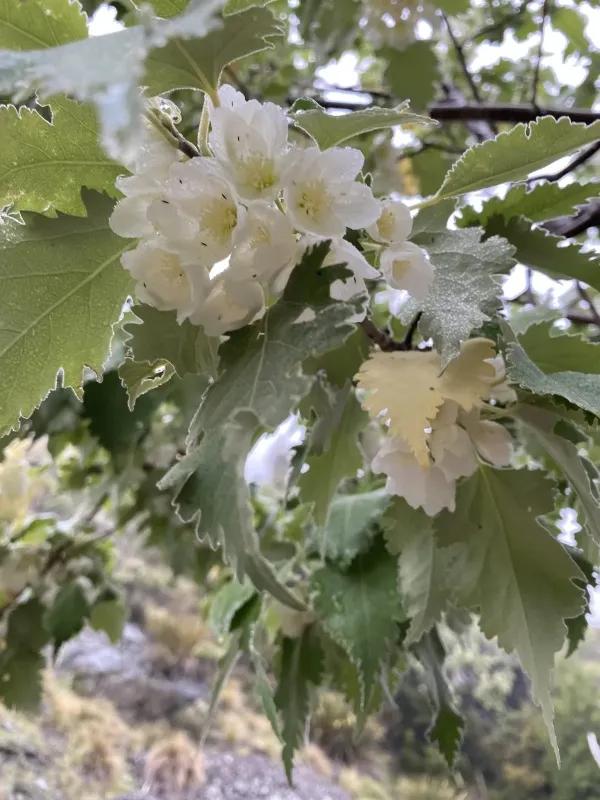
Regarding its utility, Hoheria lyallii is primarily used as an ornamental specimen in landscaping. Its stunning display of white, cherry-like flowers makes it a popular choice for woodland gardens, large borders, and as a focal point in cool-temperate climate landscapes.
Main diseases and pests
Aphids are a frequent pest for Hoheria lyallii, often clustering on soft new growth. If left untreated, they can cause leaf curling and stunt the development of the shoot tips during the peak of the spring season.
Powdery mildew is a common fungal threat, typically appearing as a white coating on the leaves when air circulation is poor or humidity levels remain high for extended periods. Pruning the canopy to increase airflow is a key preventive measure.
Root rot, driven by Phytophthora species, represents a significant threat in poorly drained soils. Gardeners should ensure proper soil preparation prior to planting to prevent conditions that favor the development of these soil-borne pathogens.
Spider mites may occasionally infest the foliage during hot, dry summer months. Regular monitoring and overhead misting can help deter these pests from establishing a significant population on the shrub.
Sanitation practices are essential for managing health, including the removal and disposal of any infected foliage or branches. This proactive approach helps in maintaining the aesthetic value and long-term vigor of the specimen.