
Hoheria sexstylosa
Hoheria sexstylosa
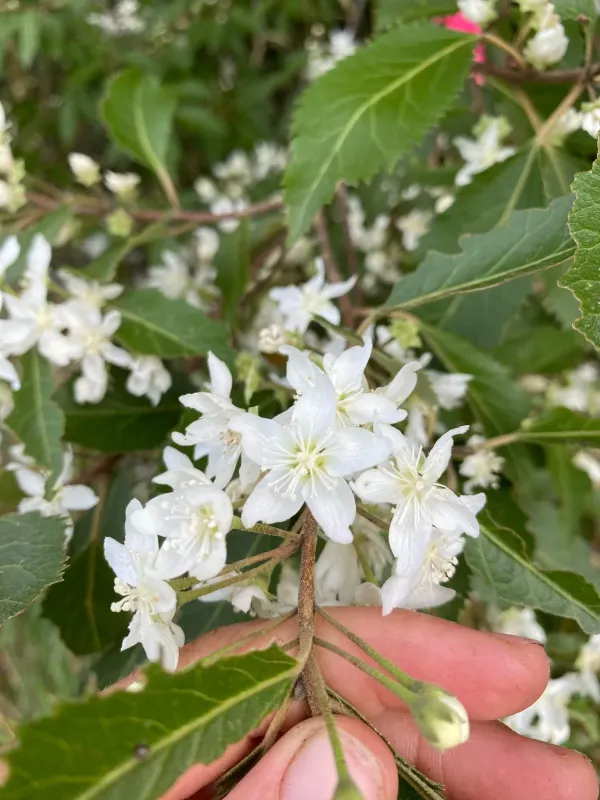
Description
Growing requirements
Hoheria sexstylosa, commonly known as the long-leaved lacebark, is an evergreen tree or shrub belonging to the Malvaceae family. Native to New Zealand, this species is highly valued for its elegant, slender habit and its profusion of white flowers in summer.
Botanically, the plant is characterized by its toothed leaves and distinctive floral structures. It can reach a considerable height in favourable conditions, making it an excellent candidate for screening or as a focal point in a garden design.
The plant requires a sheltered position protected from harsh, drying winds. It thrives in fertile, well-draining soil and is sensitive to waterlogged conditions, which can lead to root damage, so site selection is crucial for success.
Regarding climate, Hoheria sexstylosa is suited for temperate regions with mild winters. In cooler climates, it is often grown in pots that can be moved indoors during extreme weather, or against a sunny, south-facing wall to provide extra warmth.
Maintenance involves regular pruning after flowering to maintain shape and encourage dense growth. It is propagated primarily through cuttings taken in late summer or autumn, which helps maintain the specific characteristics of the parent plant.
Main diseases and pests
Common pests include aphids, which often colonize new growth during warm, dry spells. Monitoring the plant regularly is recommended, as early intervention with biological controls or horticultural soaps can manage the population effectively.
Fungal issues such as leaf spot can occur if the foliage remains wet for extended periods in environments with poor air circulation. Proper spacing between plants is essential to ensure that leaves dry quickly after rainfall or irrigation.
Root rot is a major threat caused by poor soil drainage. If the soil remains saturated for too long, the root system loses oxygen and becomes susceptible to pathogens, often resulting in the sudden wilting and decline of the tree.
Frost damage is a significant environmental threat, particularly for younger specimens. Providing temporary covers or mulching the base can help regulate soil temperature and provide a layer of protection during colder months.
To ensure long-term health, apply a balanced, slow-release fertilizer in early spring to support vigorous growth. Healthy plants are generally more resilient to incidental pest damage and have a faster recovery rate if affected by stress.