
Narrow-leaved lacebark
Hoheria angustifolia
Description
Growing requirements
The narrow-leaved lacebark (Hoheria angustifolia) is an evergreen tree species belonging to the Malvaceae family. It is native to New Zealand, where it is found in diverse lowland forest habitats, often along riverbanks and in moist valleys.
The species requires a climate that avoids extreme cold, thriving best in temperate zones with consistent rainfall. It is well-suited for gardens that offer protection from harsh, drying winds which can damage its delicate, narrow leaves.
Cultivation success depends on the provision of well-drained, nutrient-rich soil. While it appreciates moisture, the plant cannot tolerate waterlogged conditions, as poor drainage is a common precursor to root system decay in this species.
Botanically, Hoheria angustifolia is notable for its heterophyllous nature. Juvenile specimens exhibit different leaf shapes and branching patterns compared to mature trees, an evolutionary adaptation to optimize light absorption in varying environments.
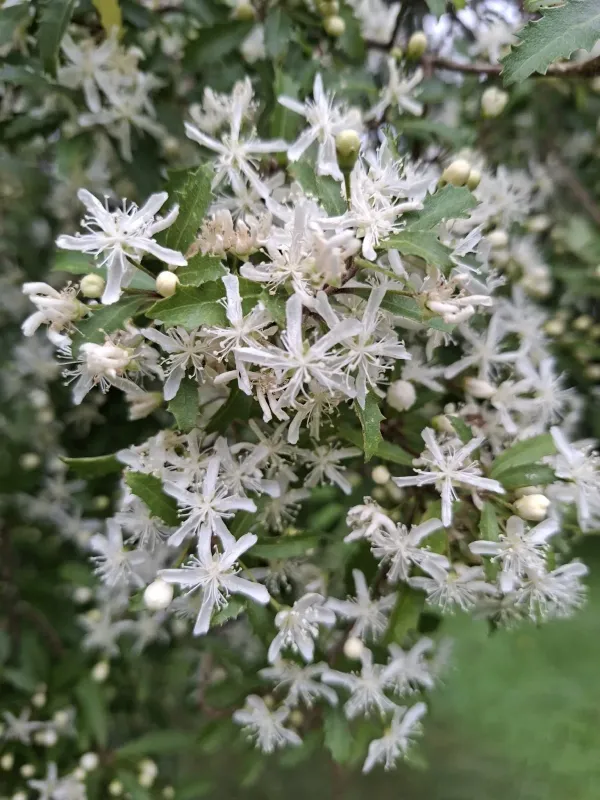
Economically and horticulturally, it is prized as a specimen plant or hedge. Its profuse, white, star-shaped flowers create a stunning visual impact during the summer months, while also acting as a valuable nectar source for local pollinators.
Main diseases and pests
The primary threats to this species include fungal infections such as root rot, which are exacerbated by poor soil drainage. Maintaining optimal soil porosity is essential for ensuring long-term tree health and vigour.
Insect pests, including aphids and spider mites, are common nuisances that target new growth. These pests can significantly stunt the development of young trees if populations are left unchecked throughout the growing season.
In humid environments, scale insects may also colonize the branches. Regular monitoring and the application of horticultural oils can serve as effective non-chemical or low-impact methods to mitigate these infestations.
Environmental stress, particularly prolonged drought, can leave the tree susceptible to secondary diseases. Providing supplemental irrigation during dry spells is critical for maintaining the plant's natural resistance to pathogens.
Standard horticultural practices, such as proper spacing and sanitization of pruning tools, remain the best defense against the spread of diseases within a collection of these ornamental trees.