
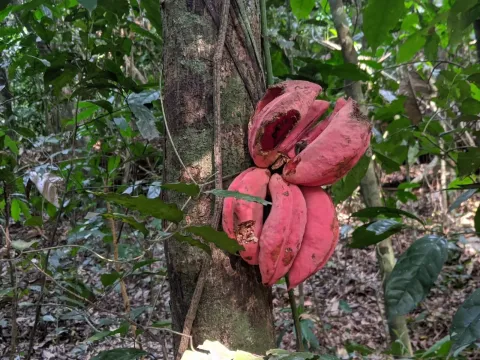
Cola chlamydantha
Cola chlamydantha
Cola chlamydantha is a tropical tree species belonging to the Malvaceae family. It is recognized for its ecological significance in the rainforest ecosystems of West Africa, where it thrives in humid and stable climatic conditions.
What the section contains
Cola chlamydantha
The plant requires high year-round temperatures and consistent rainfall to flourish. It is strictly sensitive to low temperatures and frost, making its cultivation restricted to tropical regions with high annual moisture availability.
Soil requirements for this crop include well-drained, nutrient-rich substrates. Ideally, the soil should have a high organic matter content and a slightly acidic pH, which reflects the natural forest floor conditions where the tree typically originates.
Light management is crucial during the early stages of development. Young Cola chlamydantha trees require partial shade to protect them from direct sun, while mature specimens demonstrate higher tolerance to solar radiation once their canopy is fully established.
Agronomic practices focus on maintaining soil fertility through regular mulching and organic composting. As the tree grows, proper spacing is essential to ensure adequate air circulation and to minimize the risk of developing humidity-related physiological disorders.
The economic utility of Cola chlamydantha is primarily linked to its seeds, which are harvested for their chemical properties. The plant is valued for its potential in medicinal applications and as a source of local natural stimulants.
Harvesting is performed manually, targeting mature pods directly from the trunk and major branches. Timing the harvest accurately is essential to ensure the seeds have reached their peak content of alkaloids before the pods split open naturally.
Post-harvest processing involves the removal of the fibrous outer husk followed by a drying phase. This step is critical to reduce moisture content and stabilize the seeds for storage, preventing spoilage caused by environmental bacteria or fungi.
Yield efficiency is directly proportional to the tree's health and the quality of maintenance. Selective pruning is recommended not only for harvesting purposes but also to remove dead or diseased branches, thereby improving the overall vitality of the plantation.
Storage of the finished product requires breathable packaging to maintain quality. By controlling humidity and exposure to light, producers can preserve the integrity of the seeds, ensuring they remain viable for their intended commercial applications.