
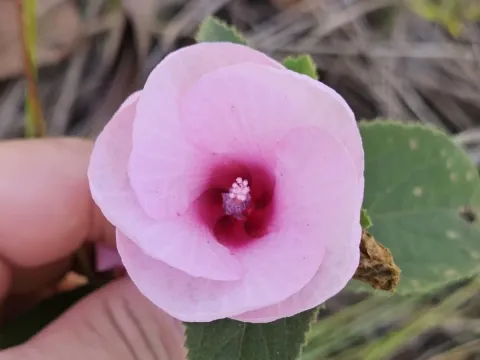
Peltaea
Peltaea
Peltaea is a member of the Malvaceae family, valued in ornamental gardening and landscape design for its exotic leaf shape and bright inflorescences. The sowing period for this plant usually occurs in late winter or early spring to ensure the seedlings have enough time for vegetation before being transplanted outdoors.
What the section contains

Peltaea
It is best to sow seeds in a light, nutrient-rich substrate mixed with sand or perlite to improve aeration. The optimal planting depth for the seeds is no more than 0.5–1 centimeter, as they require access to light for proper germination in controlled greenhouse or nursery conditions.
A crucial step in preparing for sowing is seed scarification, as their seed coats are quite dense. Germination typically occurs at a soil temperature of about 20–22 degrees Celsius, while maintaining stable humidity is essential, avoiding waterlogging which can lead to embryo rot.
Seedlings should be pricked out after the first pair of true leaves appears. During this period, it is important to provide the young plants with sufficient light; otherwise, the stems will become leggy, which negatively affects the future habit of the mature Peltaea specimen.
Transplanting to the open ground is carried out only after the danger of late spring frosts has passed. For successful adaptation, it is recommended to harden the seedlings in the open air for 7–10 days, gradually increasing their time spent outdoors.
The plant has specific requirements for growth conditions, stemming from its origin in the tropical and subtropical regions of South America. For active growth, Peltaea needs plenty of sunlight, so the site must be as open as possible and protected from strong cold winds.
The soil preferences of the crop include loose, fertile loams with a neutral or slightly acidic reaction. Peltaea is extremely sensitive to moisture stagnation in the root zone, so a high-quality drainage layer is mandatory when planting, especially in heavy clay soils.
The watering regime should be moderate but regular during the active growing season. In hot, dry months, the need for moisture increases; however, water should not touch the leaves to minimize the risk of developing fungal diseases common to many Malvaceae species.
Fertilizing is performed throughout the growing season every two to three weeks. It is best to use complex mineral fertilizers with a reduced nitrogen content to stimulate flowering rather than just vegetative mass development.
To keep the bush compact and stimulate branching, periodic pinching of the shoot tips is recommended. This is especially relevant in the first years of the plant's life, when its skeletal structure is formed, defining its decorative appearance for the entire subsequent period.
The main pests affecting Peltaea in garden conditions are spider mites and aphids. They thrive in dry air, so regular observation of the undersides of the leaves will allow for early detection of insect colonies and the implementation of necessary protective measures.
Among diseases, root rot is the most dangerous, caused by violations of watering practices. Symptoms of infestation include yellowing and wilting of the leaves, which often signals critical damage to the root system due to a lack of oxygen in waterlogged soil.
The plant can also suffer from fungal leaf spots. To prevent such conditions, it is important to maintain spatial isolation between bushes to ensure natural air circulation, which prevents the accumulation of excess moisture in the root zone.
If pests are detected, the use of biological or chemical systemic insecticides is recommended. Treatments should be carried out in the evening to avoid leaf burns from the sun and to protect beneficial pollinating insects that visit the flowers.
In case of fungal diseases, it is necessary to promptly remove the affected parts of the plant and treat it with broad-spectrum fungicides. The health of Peltaea largely depends on maintaining proper aeration and preventing excessive moisture on the foliage.