
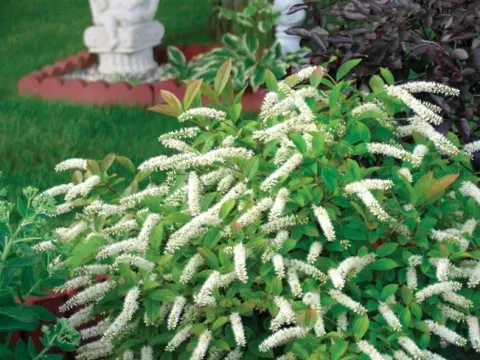
Japanese sweetspire
Itea japonica
The Japanese sweetspire (lat. Itea japonica) is a deciduous or semi-evergreen ornamental shrub belonging to the Iteaceae family. In its natural habitat, the plant is found in the regions of East Asia, including Japan, where it thrives in moist woodland areas and along the banks of water bodies.
What the section contains
Japanese sweetspire
The species is distinguished by its graceful growth habit and its ability to form dense thickets. The branches are covered with lanceolate leaves that turn brilliant shades of red or purple during the autumn season, making the plant highly desirable for landscape architectural purposes.
Successful cultivation of this species requires well-drained but consistently moist soils rich in organic matter. The plant favors acidic to slightly acidic soil conditions, similar to many heath-like plants, and does not tolerate waterlogging in the absence of proper aeration.
In terms of light exposure, the culture is relatively tolerant, though it performs best under partial shade conditions. Direct midday sunlight can adversely affect the leaf tissue, causing burns, so the optimal planting site is one with dappled sunlight or protection from harsh winds.
The cold hardiness of Itea japonica is somewhat limited; therefore, in temperate regions, it requires winter protection or placement in sheltered locations to prevent freezing. Maintaining stable air humidity is crucial, as dry climates often lead to foliage browning at the leaf margins.
While the Japanese sweetspire possesses good natural immunity, improper cultivation can lead to fungal infections such as powdery mildew or various leaf spots, often triggered by excessive humidity levels and poor air circulation around the shrub.
Among the pests that affect this crop, sap-sucking insects like spider mites and aphids are the most common concerns. Regular inspection of the undersides of the leaves allows for the early detection of parasite colonies and prevents their spread to healthy shoots.
The plant's root system is sensitive to pathogens that cause root rot, which typically develop in compacted and heavy clay soils. Prevention relies on adhering to proper watering schedules and avoiding excessive nitrogen fertilization, which encourages the growth of weak, susceptible tissues.
In the event of pest infestation, the application of biological or systemic insecticides is recommended. For managing fungal infections, copper-based fungicides or specialized products should be applied in strict accordance with the manufacturer's label instructions.
Sanitary pruning during the spring season serves as a vital component of plant protection. Removing damaged, dead, or diseased branches helps reduce the overall inoculum load and improves light penetration into the center of the shrub, thereby preventing excessive moisture buildup.