
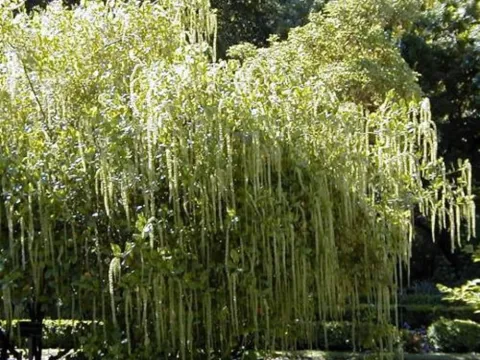
Holly-leaved sweetspire
Itea ilicifolia
Holly-leaved sweetspire (Itea ilicifolia) is an evergreen ornamental shrub belonging to the Iteaceae family. Native to the mountainous forests of central and western China, it is highly valued for its striking, holly-like foliage and long, drooping racemes of fragrant white flowers.
What the section contains
Holly-leaved sweetspire
Successful cultivation requires a location sheltered from harsh winds, ideally in partial shade. Exposure to intense midday sunlight can cause leaf scorch, particularly in regions with long, hot summers, so finding a balance is crucial for plant health.
The species thrives in well-drained, acidic, and fertile soils. It is particularly sensitive to waterlogged conditions, which can lead to rapid root rot. Ensuring proper drainage at the planting site is the most important step in preparing the soil for this shrub.
Maintenance involves providing consistent moisture, especially during the active growth period. Applying a layer of organic mulch, such as pine needles or peat, helps to retain soil moisture while simultaneously maintaining the acidity levels required for optimal nutrient uptake.
In landscaping, Itea ilicifolia is used as a distinctive specimen plant or in shaded borders. It is particularly effective when planted alongside other acid-loving shrubs, adding texture and architectural interest to a woodland-style garden design throughout the seasons.
The primary threats to Itea ilicifolia are root pathogens caused by poor drainage or excessive soil moisture. Avoiding compaction and ensuring the plant is not situated in a low-lying area where water accumulates is essential for disease prevention.
Pest issues are generally minimal but can include infestations of spider mites or aphids during particularly dry and hot spells. Regular monitoring of the foliage and timely application of horticultural oils or insecticidal soaps can manage these populations effectively.