
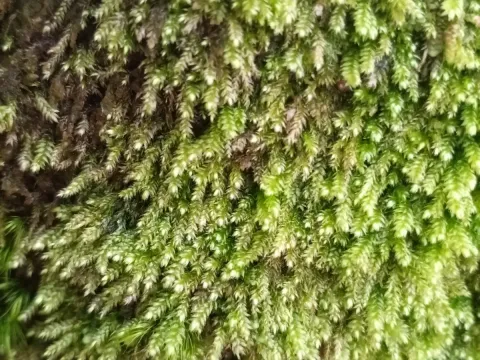
Isopterygium elegans
Isopterygium elegans
Isopterygium elegans, commonly known as the elegant silk moss, belongs to the Hypnaceae family. This bryophyte is characterized by its delicate, creeping stems that form dense, velvet-like mats in shaded, moist environments.
What the section contains
Isopterygium elegans
The plant thrives in environments with high ambient humidity, ideally between 75% and 90%. It is highly adapted to understory conditions where light levels are consistently low, making it an excellent candidate for vivariums.
Optimal substrates for this species consist of materials that provide excellent drainage while maintaining moisture, such as long-fiber sphagnum moss, finely shredded bark, or specialized peat-based mixes.
Temperature stability is crucial for the health of Isopterygium elegans. It grows best in cool to moderate environments, specifically avoiding extreme heat spikes which can cause the moss to dry out rapidly.
Agricultural use of this moss is primarily ornamental, focusing on terrarium landscaping and aquascaping where it serves as a soft, natural ground cover over hardscapes and woody elements.
The primary threat to the health of Isopterygium elegans in artificial cultivation is the accumulation of mineral salts from tap water, which can toxify the bryophyte and inhibit growth.
Pathogenic mold and fungal infections are common when airflow is restricted and moisture levels are left unmonitored for extended periods in closed setups.
Pests such as springtails or fungus gnats can occasionally be problematic if the substrate contains decomposing organic matter that has not been properly sterilized.
Direct exposure to intense artificial LED lighting or sunlight will result in chlorosis, where the moss loses its vibrant green color and eventually begins to decay.
- Sterilize all substrate materials
- Use distilled or reverse osmosis water
- Maintain constant airflow to prevent rot