
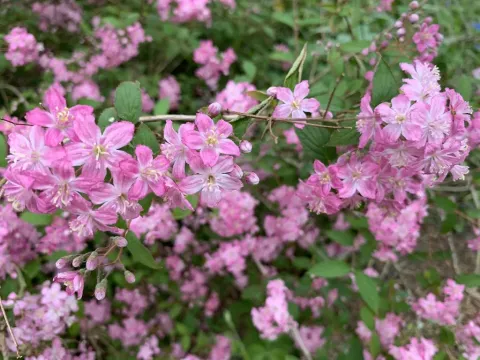
Deutzia maliflora
Deutzia maliflora
Deutzia maliflora is a deciduous flowering shrub belonging to the Hydrangeaceae family. Known for its elegant appearance, this hybrid variety is highly prized by gardeners for its profuse and delicate flowers that bloom in late spring and early summer.
What the section contains
Deutzia maliflora
This shrub requires a sunny location sheltered from strong winds to protect its slender, arching branches. While generally hardy, it thrives best in temperate climates; in colder regions, protection for the base of the plant during winter is recommended.
Regarding soil, Deutzia maliflora prefers fertile, well-draining, and moisture-retentive earth with a slightly acidic to neutral pH. Proper drainage is critical, as stagnant water can cause root rot and significantly hinder the plant's growth and overall vigor.
Agrotechnical care involves consistent watering during the growing season, especially in dry weather. Maintenance pruning is essential; it should be performed immediately after the flowering period to remove old wood and encourage the growth of new, healthy shoots.
In landscaping, this plant is used extensively as a decorative specimen. It works exceptionally well in mixed borders, as part of a floral hedge, or as a standalone centerpiece in a garden, providing a clean and sophisticated aesthetic.
Deutzia maliflora is generally resilient, but it can be susceptible to fungal issues like leaf spots when airflow is restricted. Keeping the center of the shrub open through annual pruning helps maintain proper ventilation and reduces moisture build-up.
Pests such as aphids are common visitors that target young, tender shoots. These insects weaken the plant by draining sap, often leading to stunted development. Gardeners should monitor for these early and apply insecticidal soaps or oils when necessary.
Sawfly larvae represent another significant threat, as they can quickly skeletonize the foliage during the peak growing season. Regular inspections during late spring allow for early intervention and prevent the need for harsh chemical treatments later.
Root rot is a physiological threat often linked to overwatering or heavy, poorly draining soils. To mitigate this, ensure the planting site is elevated or amended with sand and organic compost to improve water permeability.
Effective pest and disease management is supported by healthy sanitation practices, such as clearing debris from around the base of the shrub. A layer of organic mulch can also help maintain soil health and suppress weed competition, further protecting the plant.