
Deutzia kalmiiflora
Deutzia kalmiiflora
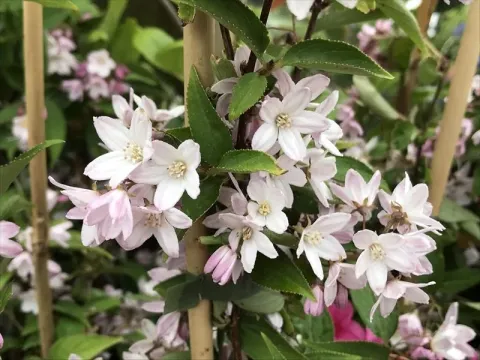
Deutzia kalmiiflora is an elegant deciduous shrub belonging to the Hydrangeaceae family. This hybrid cultivar is highly valued in horticulture for its spectacular spring display of soft, cup-shaped pink flowers that resemble those of the Kalmia species.
What the section contains
Deutzia kalmiiflora
The cultivation of this species requires well-drained, fertile, and slightly acidic to neutral soil. Plants thrive best when placed in a position receiving full sun to partial shade, which encourages vigorous growth and optimal flower bud formation.
In terms of climate, the shrub requires protection from harsh, drying winds and late spring frosts that can damage developing flower buds. Providing a thick layer of organic mulch around the root zone helps conserve soil moisture and provides winter protection.
Regular maintenance includes pruning immediately after the flowering season to encourage new growth. Removing approximately one-third of the old, woody stems helps maintain the shrub's shape and ensures an abundance of blossoms in the following season.
Propagation is typically performed via softwood cuttings taken during the growing season. Adequate watering during dry spells and a balanced fertilizer application in early spring are key to maintaining the plant's health and aesthetic appeal.
The primary pests affecting Deutzia species include aphids and various leaf-eating insects. These pests feed on the tender foliage and young stems, potentially weakening the plant if infestations are not controlled promptly.
Fungal issues, such as powdery mildew, are the most frequent health concerns for this shrub, especially in areas with high humidity and poor air circulation. Symptoms include white powdery spots on the leaves, which can lead to premature leaf drop.
Root rot caused by Phytophthora or other fungi may occur in waterlogged soils. To mitigate this risk, it is essential to ensure that the planting site has excellent drainage and that the shrub is not planted too deeply.
Preventative measures involve maintaining optimal air circulation through strategic pruning and avoiding overhead irrigation. If infection occurs, affected parts should be pruned away and disposed of, followed by an appropriate fungicide application.
Monitoring the plant for signs of stress or pest activity during the peak growing months is crucial. Keeping the area surrounding the shrub clean and free of debris helps reduce the habitat for overwintering pests and pathogens.