
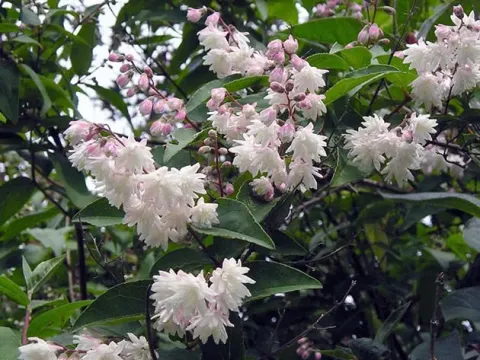
Deutzia magnifica
Deutzia magnifica
Deutzia magnifica is a stunning deciduous shrub belonging to the Hydrangeaceae family. Known for its remarkable, double white flowers that bloom in early summer, this hybrid is a result of cross-breeding between Deutzia scabra and Deutzia sieboldiana, making it a centerpiece in many ornamental gardens.
What the section contains
Deutzia magnifica
The shrub thrives in sunny locations that offer protection from harsh, drying winds. While it enjoys full sun to maximize flower production, it can tolerate partial shade in warmer climates, which helps to preserve the pristine appearance of the delicate white blossoms throughout the blooming period.
When it comes to soil, Deutzia magnifica prefers fertile, well-drained loamy soils with a neutral to slightly alkaline pH. Drainage is a critical factor for success, as the plant is highly sensitive to waterlogged conditions, which can quickly lead to root rot and eventual plant failure.
Cultural maintenance involves regular watering during dry spells to maintain soil moisture, especially during the active growth phase in spring and early summer. Proper pruning is essential; it should be performed immediately after the flowering period to encourage new vigorous growth and maintain an attractive, balanced shape.
Although it is relatively hardy, in regions with severe winters, the shrub may require winter protection to prevent frost damage to the flower buds. Mulching around the base and providing a light covering for younger specimens ensures that the shrub remains healthy and productive for many seasons.
The most common health issues for Deutzia magnifica are fungal diseases, with powdery mildew being the primary concern. This condition is often exacerbated by high humidity and poor air circulation within the shrub's canopy, necessitating periodic thinning of the branches to allow better airflow.
Insect pests, including aphids and spider mites, can occasionally colonize the young foliage and shoots. Early detection is key; inspecting the plant regularly allows gardeners to address infestations before they spread significantly, utilizing horticultural soaps or systemic insecticides when necessary.
Preventative care is the best strategy for managing potential threats. Ensuring the plant is not overcrowded and providing sufficient sunlight significantly reduces the risk of fungal infections. Avoid overhead watering late in the day to minimize the time foliage stays wet, which deters fungal growth.
Winter-related injuries, such as frost cracks and bark damage, can leave the shrub susceptible to secondary opportunistic diseases. Promptly pruning away damaged wood during spring pruning cycles helps the plant recover and diverts its energy toward new, healthy development.
Maintaining soil fertility through balanced fertilization prevents nutrient deficiencies that can weaken the plant's natural immune system. It is advised to avoid excessive nitrogen application in late summer to ensure that the wood matures correctly before the onset of dormancy.