
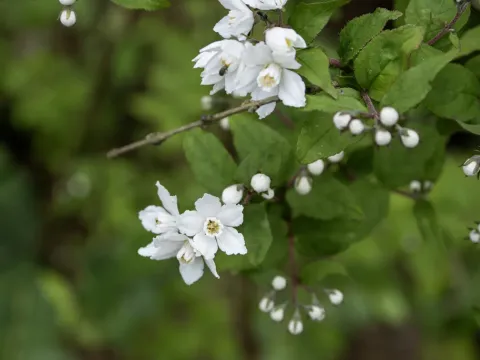
Deutzia glomeruliflora
Deutzia glomeruliflora
Deutzia glomeruliflora is a distinguished deciduous shrub belonging to the Hydrangeaceae family. Known for its compact growth habit and impressive floral displays, it is a popular choice for gardeners seeking to add structural beauty to their landscape.
What the section contains
Deutzia glomeruliflora
The species originates from temperate regions of China. It thrives in locations that provide plenty of indirect sunlight and protection from harsh, drying winds. While it can adapt to partial shade, full sun promotes the most prolific blooming cycles.
Soil requirements for this shrub include a well-draining, humus-rich substrate. It prefers a neutral to slightly acidic pH. Incorporating organic compost during the planting phase helps improve moisture retention while preventing the roots from sitting in overly saturated, heavy clay soils.
Cultural practices include consistent watering during the growing season, especially in the early stages of establishment. During the summer, mulching around the base of the plant helps maintain soil temperature and moisture levels, protecting the shallow root system.
Pruning is an essential maintenance task. It should be performed immediately after the plant finishes flowering. Removing spent flower stalks and older, woodier stems encourages the development of vigorous new shoots, ensuring a spectacular floral display for the following season.
Deutzia glomeruliflora can be susceptible to common fungal issues, primarily powdery mildew. This condition often appears during periods of high humidity and poor air circulation, manifesting as white, dusty patches on the leaf surfaces.
Pests such as aphids and leaf miners are known to occasionally infest the foliage. These pests can weaken the plant by feeding on vital sap, leading to stunted growth or discolored, curled leaves if left unaddressed.
Management of these threats involves cultural controls such as spacing plants adequately to ensure proper airflow. Removing infected parts immediately can prevent the spread of fungal spores throughout the garden.
Chemical intervention may be necessary when pest populations exceed acceptable thresholds. Using selective insecticides and fungicides helps manage the infestation while minimizing the impact on beneficial garden insects.
Overall plant health is the best defense against pests and diseases. By maintaining optimal soil fertility and ensuring the plant receives adequate water and light, gardeners can minimize the susceptibility of their Deutzia to environmental stressors.