
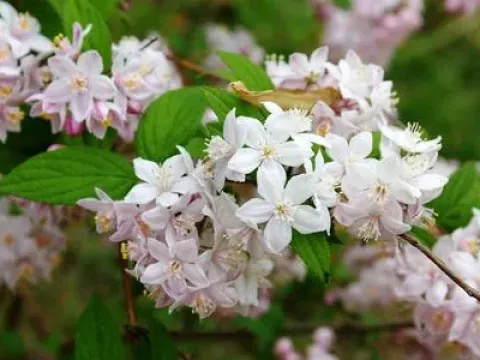
Deutzia excellens
Deutzia excellens
Deutzia excellens is an elegant deciduous shrub belonging to the Hydrangeaceae family. Prized for its remarkable blooming clusters, this species serves as a focal point in ornamental landscapes and home gardens.
What the section contains
Deutzia excellens
This shrub flourishes in locations that receive full sun to partial shade, provided they are sheltered from harsh winds. A sunny position is critical for achieving the intense flowering characteristic of the species.
The ideal soil conditions involve nutrient-rich, well-draining, and moist loam. The plant is somewhat sensitive to waterlogging, so ensuring good soil aeration is essential for healthy root development.
Regular watering is mandatory during dry spells, especially during the active growth phases in spring and summer. Applying organic mulch around the base helps retain soil moisture and suppresses weeds.
Pruning is a vital horticultural practice for this plant. By cutting back old stems immediately after the flowering period, gardeners can promote vigorous new growth and ensure a better display of flowers next year.
While Deutzia excellens is generally robust, it may occasionally face issues with fungal leaf spots, especially in regions with prolonged high humidity and poor ventilation.
Pests such as aphids or leaf-feeding caterpillars might occasionally attack tender shoots. Monitoring the plant during the early stages of the growing season is recommended for quick intervention.
To prevent the spread of diseases, it is essential to keep the planting area clean by removing debris and ensuring that the shrub has enough space for proper airflow.
Integrated pest management, including the use of horticultural oils or safe insecticides, should be employed if infestation levels exceed acceptable aesthetic thresholds.
A well-nourished plant is naturally more resilient to environmental stressors and pests, highlighting the importance of regular fertilization and correct site selection in successful cultivation.