
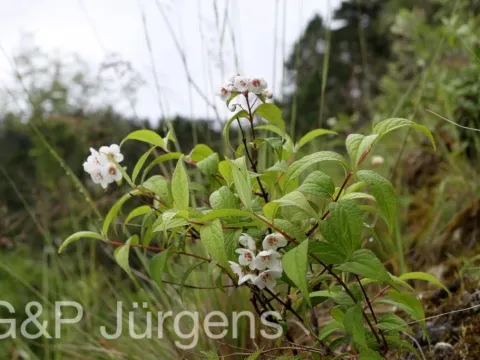
Deutzia corymbosa
Deutzia corymbosa
Deutzia corymbosa is a deciduous ornamental shrub belonging to the Hydrangeaceae family. Native to the Himalayan regions, it has become a popular choice for gardens due to its elegant, white clusters of flowers that appear during the spring season.
What the section contains
Deutzia corymbosa
The plant thrives in well-drained, fertile soil with a slightly acidic to neutral pH. It is essential to ensure that the planting site does not suffer from waterlogging, as the roots are sensitive to excessive moisture accumulation, especially during the dormant season.
In terms of climate, it prefers temperate conditions with exposure to full sun or light shade. While it is hardy, it requires protection from harsh winter winds in colder zones to prevent branch dieback and to ensure the survival of flower buds for the following year.
Cultivation practices should include consistent watering during the growing season to maintain soil moisture. Applying organic mulch around the base of the shrub helps regulate temperature and preserves soil humidity, which is vital for sustained growth.
Regular pruning is necessary to maintain the shape and vitality of the plant. It is recommended to prune immediately after flowering to encourage new, vigorous growth, which will be the primary source of blooms for the next growing season.
Deutzia corymbosa is occasionally susceptible to fungal diseases such as powdery mildew, particularly in environments with poor air circulation or high humidity levels during the peak of summer.
Pests that may impact the health of the shrub include aphids, which often feed on the tender new growth and developing flower buds, causing potential stunting or deformation of the foliage.
Management of these threats involves keeping the shrub properly pruned to allow air to flow freely through the branches, which significantly reduces the risk of fungal outbreaks.
Chemical control measures, such as the application of fungicides and insecticides, should be used judiciously when infestations are detected, following the manufacturer's guidelines for safe use.
Early detection through frequent monitoring of the leaves and stems is the most effective way to prevent widespread damage and ensure the longevity of the flowering shrub.