
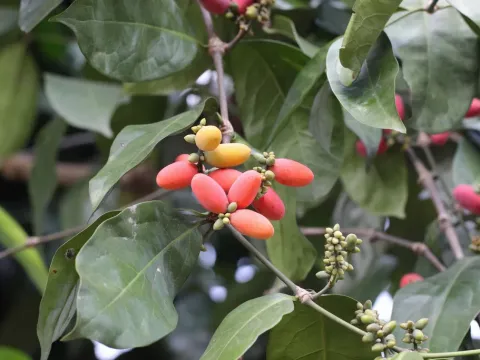
Gnetum funiculare
Gnetum funiculare
Propagation of Gnetum funiculare is primarily achieved through seeds, which require specific conditions to break dormancy and ensure successful germination.
What the section contains
Gnetum funiculare
The seeds should be sown in deep, well-draining containers filled with a rich, organic-based substrate that mimics the forest floor environment.
Sowing is best performed at the onset of the rainy season to leverage the natural humidity and temperature cycles conducive to vigorous seedling growth.
Constant soil moisture and a steady temperature range between 25 and 28 degrees Celsius are critical parameters for the viability of young sprouts.
Vegetative propagation via cuttings is also practiced, utilizing rooting hormones and misting systems in greenhouse conditions to facilitate the development of a robust root system.
Gnetum funiculare belongs to the Gnetaceae family and is recognized as a woody climber native to the dense, humid rainforests of Southeast Asia.
The species has high requirements for atmospheric humidity, making it essential to cultivate in environments that closely replicate its native tropical climate.
Soils must be fertile, slightly acidic, and exhibit excellent drainage properties to prevent root suffocation caused by waterlogging in the growing medium.
As a forest-dwelling climber, it prefers filtered light or partial shade, avoiding direct exposure to harsh tropical sun that can scorch its leaves.
The installation of sturdy vertical supports is a mandatory agrotechnical practice, as the plant needs to climb to achieve proper foliage development.
The economic value of this crop lies in its edible leaves and seeds, which have been consumed by indigenous populations for their nutritional properties.
The leaves are harvested regularly and used in local culinary preparations, appreciated for their unique flavor and concentration of beneficial phytonutrients.
Seeds of the plant can be harvested after maturation and are typically roasted or boiled, serving as a valuable local source of dietary protein and fats.
Yield capacity is closely linked to the maturity of the vine and the quality of the vertical support system provided, which allows for maximum leaf expansion.
Research into the potential of this species for wider commercial cultivation suggests opportunities in both the functional food and natural medicinal markets.
The primary threat to Gnetum funiculare is root rot, induced by fungal pathogens that thrive in poorly drained soils or conditions with excessive moisture.
Leaf spot diseases can occur if air circulation within the canopy is insufficient, necessitating periodic thinning of the vines to improve airflow.
Common pests, including spider mites and mealybugs, are frequently observed in greenhouse environments, particularly if the humidity levels drop significantly.
Strict sanitary practices, including the regular removal of dead or infected organic matter, are required to maintain a healthy and productive plantation.
Chemical intervention should be kept to a minimum, focusing instead on integrated pest management strategies to preserve the plant's delicate ecological balance.