
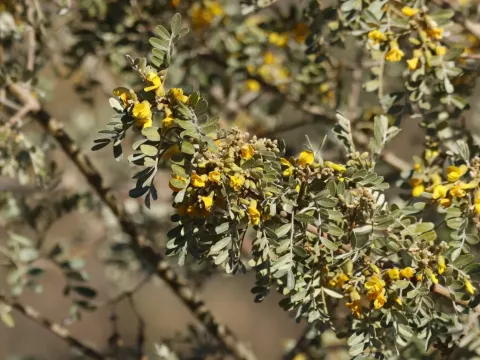
Mamane
Sophora chrysophylla
Mamane (Sophora chrysophylla) is a significant tree species belonging to the Fabaceae family. Native exclusively to the Hawaiian Islands, it serves as a critical keystone species within subalpine dry forest ecosystems, supporting a wide variety of endemic wildlife and bird species.
What the section contains
Mamane
This species is highly adapted to harsh high-altitude conditions. It typically thrives at elevations ranging from 600 to 3,000 meters, where it demonstrates remarkable resilience to cold temperatures and intense ultraviolet radiation found in the mountain regions.
Regarding soil requirements, Mamane prefers well-drained volcanic substrates. It is exceptionally drought-tolerant once established, making it a suitable candidate for reforestation projects in arid or degraded landscapes where other tree species might struggle to survive.
Agronomic management involves careful selection of planting sites that provide adequate exposure to sunlight. Propagation from seeds requires mechanical or chemical scarification of the hard seed coat to achieve uniform germination in a nursery setting.
Economic and ecological utility includes its historical use by native Hawaiians for crafting durable tools and structures. Currently, the tree is prioritized in conservation programs due to its slow growth rate and the need for proactive management to ensure future population stability.
The primary threat to Sophora chrysophylla is the grazing pressure from feral ungulates such as sheep and goats. These animals consume seedlings and saplings, effectively halting natural forest regeneration and preventing the long-term survival of the stands.
Pathological risks include various fungal infections, particularly if the plants are situated in poorly drained or waterlogged soils. Additionally, specific insect pests can infest seeds and pods, reducing the quantity of viable seeds available for natural propagation.