
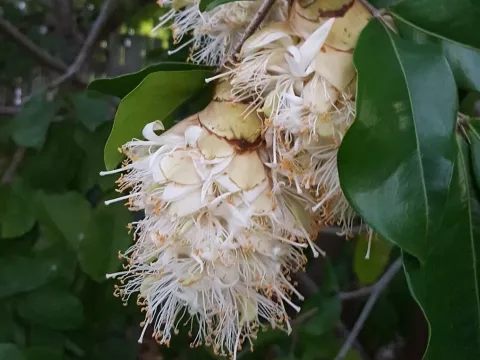
Maniltoa
Maniltoa
Maniltoa is a genus of evergreen trees and shrubs belonging to the legume family (Fabaceae). These plants are widely appreciated for their unique, cascading, and often brightly colored new foliage, which changes appearance rapidly as the leaves mature.
What the section contains


Maniltoa
The native range of this genus spans the tropical landscapes of Southeast Asia and Oceania, including regions such as Indonesia, New Guinea, and the Philippines. These plants thrive in high-humidity, warm environments characterized by abundant tropical rainfall.
Successful cultivation requires soil that is rich in organic matter and highly well-draining. Maniltoa cannot tolerate waterlogged conditions, as the root system is highly susceptible to decay in the absence of proper aeration and drainage management.
Climate requirements involve consistent warmth, as the species lack cold hardiness. In regions outside of the tropical belt, they are cultivated primarily in greenhouse environments or managed as indoor ornamental trees to ensure stable temperatures above 20°C.
General agronomic care focuses on maintaining consistent soil moisture and high atmospheric humidity. Pruning is essential during the early developmental stages to encourage a dense canopy structure, which maximizes the aesthetic impact of the periodic foliage flush.
Common pests affecting Maniltoa include scale insects and aphids, which settle on the underside of leaves and along tender stems. Regular monitoring and the use of insecticidal soaps are standard protocols for managing these pest populations effectively.
Fungal leaf spot diseases may occur in stagnant, overly humid conditions with poor air circulation. Implementing adequate spacing between individual plants and ensuring proper ventilation within the cultivation area are primary methods to mitigate disease pressure.