
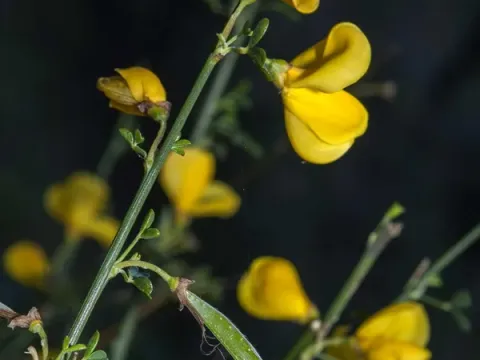
Malagan Broom
Cytisus malacitanus
Malagan Broom (Cytisus malacitanus) is a perennial shrub belonging to the Fabaceae family, native to the Mediterranean region. It is characterized by its slender branches and vibrant floral display, making it a distinct botanical specimen.
What the section contains
Malagan Broom
This crop requires full sun exposure to thrive, as it is highly photophilous. It is well-adapted to warm climates but requires protection from severe frost, which can damage the delicate terminal buds of the plant.
Soil requirements for this species are specific: it demands excellent drainage and prefers rocky, sandy, or poor soils. Heavy clay soils should be amended with organic matter and grit to prevent root rot.
The agronomic management is relatively low-maintenance, as the plant is adapted to drought conditions. Watering is only critical during the establishment phase; established plants require little to no supplemental irrigation.
Its primary economic and practical use is in ornamental landscaping and xeriscaping. Because it belongs to the legume family, it serves as a nitrogen-fixing species, potentially improving soil health in managed environments.
The plant is susceptible to powdery mildew, a fungal condition triggered by high relative humidity and poor airflow within the shrub's canopy.
Pest pressure is often dominated by aphids and spider mites, which can cause significant damage to young succulent foliage during the heat of the summer.
Management of these threats includes ensuring adequate spacing between individual plants to promote airflow and using selective systemic pesticides when infestation levels exceed economic thresholds.
Root system issues, primarily associated with waterlogging, are a major threat that can lead to rapid decline and mortality of the shrub in heavier soil profiles.
Integrated pest management strategies should emphasize the removal of infected plant debris to reduce the overwintering population of harmful fungal pathogens and insects.