
Pueraria phaseoloides
Pueraria phaseoloides (Roxb.) Benth.
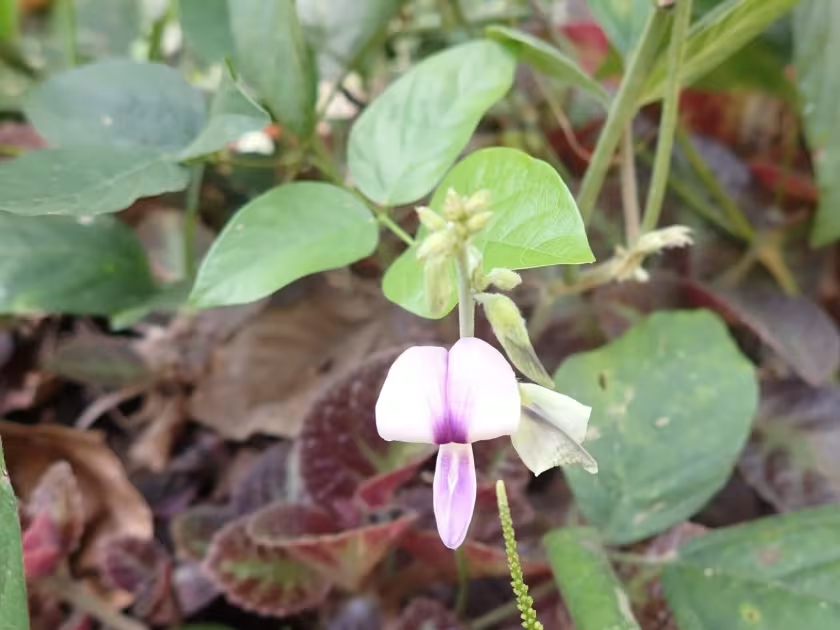
Description
Sowing dates
Sowing of Pueraria phaseoloides is ideally performed at the onset of the rainy season to provide consistent moisture for early seedling establishment.
The seeding rate typically ranges from 3 to 5 kilograms per hectare when sown as a sole crop for pasture or cover management purposes.
Seed scarification is highly recommended to break dormancy and ensure a uniform germination rate across the field during the planting phase.
The crop can be drilled in rows or broadcasted depending on the specific application, such as erosion control on steep tropical slopes.
Proper seed placement at a shallow depth of approximately 1 cm is crucial for achieving successful emergence and strong initial root development.
Growing requirements
This legume thrives in humid tropical climates, requiring consistent annual rainfall typically exceeding 1500 mm for optimal productivity.
It is remarkably adaptable to acidic and nutrient-poor soils, which makes it a preferred choice for rehabilitating degraded agricultural lands.
The plant prefers well-drained soils but demonstrates a significant ability to withstand temporary waterlogging during heavy monsoon rains.
Temperature requirements are high, with the plant showing active growth primarily in environments where temperatures remain above 20 degrees Celsius.
While it is highly productive, it remains sensitive to prolonged dry spells and cannot survive frost, limiting its range to tropical zones.
Yield
Pueraria phaseoloides provides a substantial yield of biomass, often reaching 15–20 tons of green matter per hectare under ideal conditions.
The high protein content of the forage makes it an excellent supplement for livestock, significantly improving animal weight gain and health.
As a nitrogen-fixing legume, it adds significant fertility to the soil, boosting the growth of associated grasses in mixed pasture systems.
The yield can be sustained through multiple harvests per year if proper management practices, such as rotational grazing, are followed strictly.
When used as a green manure, it adds significant organic matter to the topsoil, improving overall soil structure and water-holding capacity.
Main diseases and pests
Common pests include various defoliating insects and lepidopteran larvae that can cause significant damage to the lush green canopy.
Fungal diseases like anthracnose and leaf spots may proliferate during periods of excessive rainfall and high humidity, affecting leaf yield.
Root-knot nematodes represent a significant underground threat, potentially stunting growth and reducing the plant's nitrogen-fixing efficiency.
Weed competition during the initial months after sowing is a major risk, as the seedlings grow relatively slowly compared to aggressive tropical weeds.
Implementing integrated pest management and selecting resistant local ecotypes are essential strategies to mitigate these agricultural threats.
Harvesting
Harvesting for fodder is best initiated when the plant achieves full canopy cover, usually between 5 to 7 months post-planting.
Cutting heights should be maintained at 15–20 cm above the ground to ensure the plant reserves enough energy for rapid regrowth and recovery.
In grazing systems, rotational cycles should be implemented to prevent overgrazing, which can rapidly deplete the plant's energy reserves.
For seed production, the pods must be harvested when they turn dark brown, often requiring multiple passes due to the plant's indeterminate flowering habit.
Proper storage of the harvested forage is vital to prevent fungal growth, ensuring high-quality feed is available for livestock during drier periods.