
Kudzu
Pueraria montana (Lour.) Merr. var. lobata (Willd.) Maesen & S. M. Almeida ex Sanjappa & Predeep
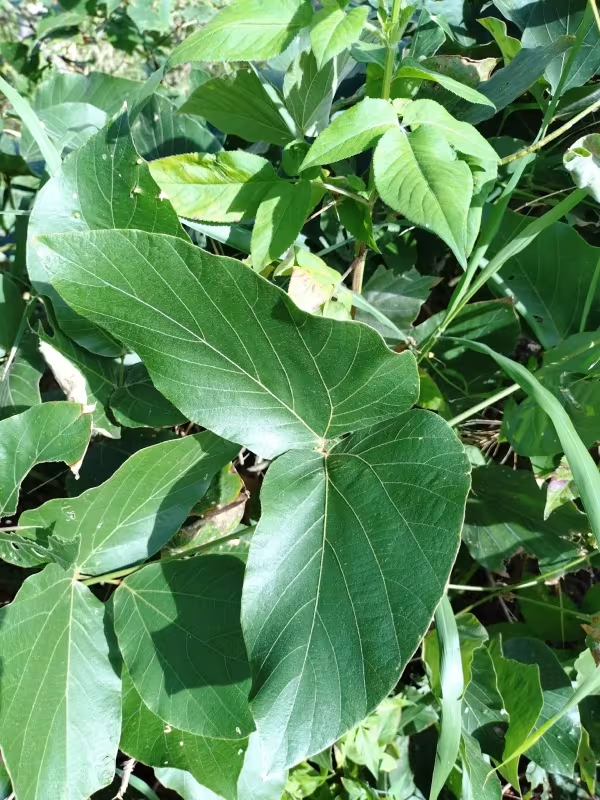
Description
Sowing dates
Kudzu is a vigorous perennial vine belonging to the Fabaceae family. Optimal sowing occurs when soil temperatures are consistently above 15-20 degrees Celsius, typically in late spring, ensuring rapid germination.
The seeds possess a hard, impermeable seed coat, making scarification essential before planting. This treatment significantly enhances germination rates and provides a more uniform stand development across the field.
Planting depth should be maintained between 2 to 4 centimeters. Adjusting depth based on soil moisture is critical; deeper planting is preferred in drier soils, while shallower planting is advised for heavier, moist soil types.
While direct seeding is common, starting seedlings in controlled environments for later transplantation is a viable strategy in regions with shorter growing seasons to ensure maximum biomass accumulation.
During the establishment year, kudzu requires diligent weed control. The plant invests heavily in root development initially, making it vulnerable to competition from aggressive weeds until the vines form a dense canopy.
Growing requirements
Kudzu is a thermophilic and heliophilic crop originating from East Asian climates. It thrives in regions with long, warm growing seasons and exhibits optimal growth at temperatures consistently above 25 degrees Celsius.
The plant prefers deep, well-drained loamy soils with a neutral or slightly acidic pH. Waterlogging should be avoided at all costs, as the root system is susceptible to decay under prolonged anaerobic conditions.
A key agronomic advantage is its nitrogen-fixing ability through symbiosis with root-nodule bacteria. This allows kudzu to thrive on nutrient-poor soils, actively improving soil structure and nitrogen content over time.
Kudzu demonstrates remarkable drought tolerance once established, thanks to its deep, tuberous taproots. However, for maximum forage productivity, supplemental irrigation during dry spells is highly recommended.
Exposure to full sunlight is vital for efficient photosynthesis. Any degree of shade significantly reduces vine growth and leaf production, highlighting the importance of site selection in large-scale agricultural operations.
Yield
Kudzu is highly prized for its rapid growth rate, capable of producing significant amounts of green biomass. Under intensive management, it can yield between 30 and 50 metric tons of forage per hectare annually.
The nutritional profile of kudzu is impressive, boasting high crude protein levels and digestibility that rivals alfalfa. This makes it an excellent candidate for integrated livestock feeding programs.
Productivity typically peaks during the second and third years as the root system stabilizes and the vine mat thickens. This density allows for multiple harvests throughout the season depending on local climate conditions.
Proper harvest management, including optimal timing, is required to maintain high yield levels. Over-harvesting or cutting too close to the ground can shock the plant and lead to a reduction in subsequent regrowth vitality.
Agronomists emphasize the importance of density control. While thick growth suppresses weeds, overcrowding can lead to poor aeration and increased susceptibility to fungal issues, necessitating a balanced planting density.
Main diseases and pests
Despite its robustness, kudzu is prone to various fungal infections, notably anthracnose and powdery mildew. These diseases often emerge when humidity levels are high and air circulation is insufficient within the dense vine canopy.
Insect pests, including leaf-feeding beetles and spider mites, can cause damage, especially in younger stands. Integrated pest management practices, including field scouting, are necessary to prevent economic losses.
Due to its aggressive growth, kudzu is categorized as an invasive species in many parts of the world. Growers must implement strict boundary management to ensure the crop remains contained within designated agricultural plots.
Root-knot nematodes are a significant underground threat. These parasites can weaken the plant, reducing its vigor and overall biomass yield. Using resistant cultivars and crop rotation is the best defense against these pests.
Mechanical injuries during field operations can serve as entry points for pathogens. Maintaining well-calibrated, sharp machinery is vital to minimize plant tissue damage during mowing and harvest procedures.
Harvesting
Harvesting is ideally performed during the budding stage to capture the highest nutritional value before nutrients are redirected into flowering. This maximizes protein density in the harvested green matter.
Rotary mowers are the preferred equipment for handling the thick, fibrous stems of kudzu. Care must be taken to set the cutting height correctly, ensuring that the crown and root nodes remain intact for rapid regrowth.
Immediate processing is crucial. Once harvested, the green matter should be quickly wilted or ensiled. Because of the high moisture content of the stems, rapid drying is required to prevent mold and nutrient loss.
Ensiling is a highly effective way to preserve kudzu forage. The use of additives during the ensiling process promotes stable fermentation, resulting in high-quality silage that remains palatable for livestock throughout the winter.
Seed harvesting is conducted at the end of the season. Due to the asynchronous maturation of pods, growers often utilize a multi-pass approach or windrowing to allow for after-ripening, thereby maximizing seed recovery.