
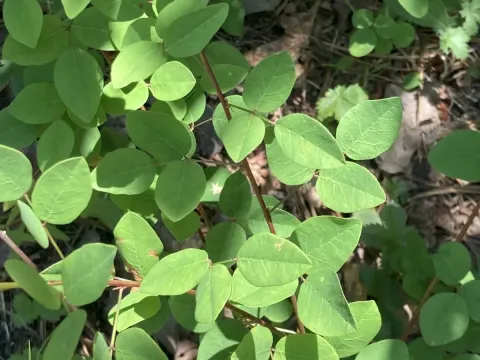
Maryland tick-trefoil
Desmodium marilandicum
Maryland tick-trefoil (Desmodium marilandicum) is a perennial legume belonging to the Fabaceae family. It is native to eastern North America, where it typically thrives in open woodlands and field borders.
What the section contains
Maryland tick-trefoil
The plant requires well-drained, slightly acidic to neutral soils to maintain optimal growth. While it is hardy, it performs significantly better in areas with consistent soil moisture that does not remain waterlogged.
In terms of climate, it prefers regions with warm summers and mild spring temperatures, showing high tolerance to varying levels of humidity provided there is sufficient sunlight exposure.
As a nitrogen-fixing species, it plays a vital role in natural ecosystem restoration and sustainable farming practices, reducing the need for synthetic nitrogen fertilizers in the crop rotation cycle.
Botanically, it is distinguished by its trifoliate leaves and unique, jointed seed pods that are designed for dispersal through attachment to passing animals, reflecting its evolutionary strategy.
Like many legumes, Maryland tick-trefoil is susceptible to various fungal pathogens if managed in conditions with poor air circulation or excessive soil moisture, including various types of mildew.
Pests such as aphids, spider mites, and specialized legume-feeding beetles can cause significant damage to the plant tissue if not monitored during the peak of the growing season.
Weed management remains the most significant challenge during the seedling establishment phase, as the young plants are slow to develop and can be easily outcompeted by invasive weeds.
Crop rotation and field sanitation are crucial strategies for managing potential threats, as these practices help prevent the buildup of soil-borne pathogens and insect larvae in the field.
Integrated pest management (IPM) protocols should be implemented to ensure the longevity of the stand, focusing on mechanical weed control and targeted biological treatments where necessary.