
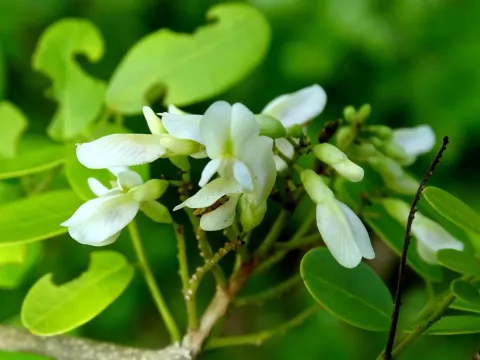
Dalbergia glabra
Dalbergia glabra
Dalbergia glabra is a perennial woody vine belonging to the Fabaceae family. It is native to tropical regions where it thrives in warm and humid environments with stable temperatures throughout the year.
What the section contains
Dalbergia glabra
The plant requires well-drained, nutrient-rich soil to support its vigorous growth. Heavy clay soils that retain moisture for long periods should be avoided to prevent root diseases caused by waterlogging.
Ideal cultivation conditions include temperatures ranging from 20 to 30 degrees Celsius. The plant is sensitive to frost and extreme cold, requiring a protected location if grown in temperate or borderline climates.
Adequate support systems, such as trellises or arbors, are essential for this climbing species. Proper spacing is needed to ensure sufficient air circulation around the foliage and stems to prevent fungal outbreaks.
Moderate to bright indirect light is preferred for healthy leaf development. While the plant can tolerate some direct sunlight, intense afternoon sun may scorch the leaves in hotter regions.
The economic yield of Dalbergia glabra is primarily focused on its decorative value and potential timber usage in native habitats. Growth rates are influenced by environmental management and soil fertilization.
Proper pruning techniques are crucial to maintain the vine's health and promote denser foliage. Strategic trimming helps concentrate the plant's energy into primary stems, which increases structural strength.
When grown in professional nurseries, plant vigor is assessed by stem diameter and total length of the growth. Frequent applications of balanced liquid fertilizers support consistent development.
The productivity of the vine can be maximized by providing consistent irrigation during the dry season, ensuring that the root zone remains consistently moist but not saturated.
Harvesting for specific industrial or ornamental uses requires careful timing to ensure that the stems have reached the required maturity and durability for their intended application.
Fungal pathogens represent the most significant threat, particularly those that target the root system in poorly drained soil. Leaf spots caused by fungi are also common in highly humid conditions.
Pests such as aphids and mealybugs can colonize the young, succulent shoots of the vine. Regular monitoring and the application of organic soap-based insecticides can help control these infestations.
Root rot is a critical risk that must be managed through precise irrigation scheduling. Symptoms include yellowing leaves and wilting even when the soil appears damp.
Spider mites can become problematic in indoor or greenhouse settings where the air is excessively dry. Maintaining adequate humidity levels is a simple and effective preventative measure.
Soil-borne nematodes may damage the root architecture, hindering nutrient uptake. Incorporating organic matter into the soil helps improve soil health and resilience against such underground pests.