
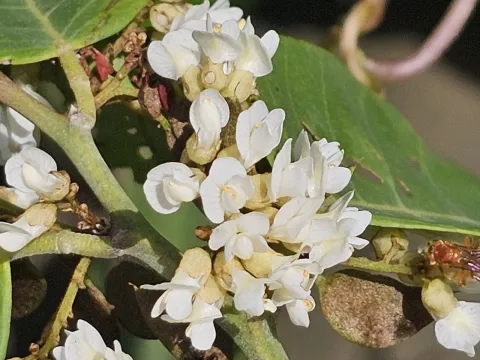
Dalbergia ecastaphyllum
Dalbergia ecastaphyllum
Dalbergia ecastaphyllum is a perennial shrub belonging to the Fabaceae family, widely known for its role in tropical coastal ecosystems. It typically grows as a sprawling shrub or a small tree, often found in thickets near salt marshes and beaches.
What the section contains
Dalbergia ecastaphyllum
The plant requires a tropical climate with consistent warmth throughout the year. It does not tolerate cold temperatures or frost, making it suitable only for specific zones where the temperature remains stable.
Regarding soil requirements, this species thrives in sandy or well-drained substrates. Its ability to tolerate salt spray and brackish groundwater allows it to colonize challenging coastal environments where other crops might struggle.
Agronomic management of Dalbergia relies on its nitrogen-fixing capabilities, which improve soil fertility. Planting requires sufficient spacing to ensure adequate light exposure, which is crucial for the development of its characteristic foliage.
The economic utility of the plant includes its dense and durable wood, which is valued in craftsmanship, and its traditional use in various local industries for dyes and medicinal extracts.
The most significant threats to Dalbergia ecastaphyllum include fungal pathogens, particularly those causing root rot in waterlogged conditions. Excessive humidity without proper aeration can lead to severe outbreaks of foliage diseases.
Pest pressure often comes from wood-boring insects and sap-sucking pests that target young branches. These infestations can significantly stress the plant and reduce its overall biomass production.
Effective pest management involves regular field monitoring and the maintenance of optimal soil drainage to prevent fungal colonization. Integrated pest management (IPM) practices are highly encouraged in these agricultural systems.
Sanitation is key to managing disease, requiring the prompt removal and disposal of infected plant material. This prevents the spread of pathogens to healthy clusters within the cultivation area.
Biological control agents, such as beneficial insects or microbial fungicides, are preferred to manage threats while maintaining the environmental integrity of the coastal regions where it is cultivated.