
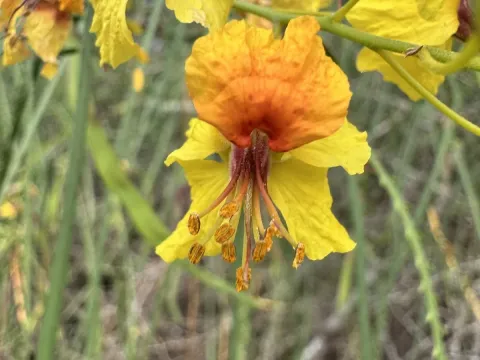
Cercidium
Cercidium
Cercidium, belonging to the Fabaceae family, is a genus of deciduous trees and shrubs native to the desert regions of the Americas. These plants are scientifically renowned for their ability to perform photosynthesis through their green bark, which sustains them during leaf drop.
What the section contains

Cercidium
The cultural requirements for Cercidium focus on mimicking their natural desert environment. They thrive in full sun exposure and require extremely well-drained soil, as they are highly intolerant to root saturation and standing water.
In terms of soil composition, these plants adapt well to rocky, sandy, or gravelly substrates typical of aridisols. They generally do not require high fertilization, as they are evolved to utilize limited nutrients efficiently in harsh desert landscapes.
Climate adaptation is the defining feature of this species. Cercidium is highly heat-tolerant and thrives in areas with high daily temperature amplitudes, making it a perfect candidate for xeriscaping and low-maintenance landscape design in arid zones.
Their primary use is as ornamental trees that provide a striking yellow bloom in spring. Beyond aesthetics, they serve as valuable shade providers that do not compete heavily with surrounding xerophytic vegetation for scarce water resources.
The most significant threat to the health of Cercidium is the group of pathogens causing root and crown rots. These diseases are almost exclusively triggered by improper irrigation practices that leave the soil waterlogged for extended periods.
Insect pests, including various species of aphids and borers, can become problematic if the tree is under physiological stress. Borers, in particular, can cause severe structural damage to the branches by tunneling into the bark.
Management of pests involves integrated pest management (IPM) strategies, which prioritize keeping the plant healthy through correct irrigation and soil management rather than relying solely on chemical intervention.
Fungal pathogens on the branches are managed through precise pruning during the dormant season. Removing dead or infected wood helps to stop the spread of infection and improves the overall vigor of the tree.
Regular monitoring of the bark and leaves is essential. Early detection of leaf yellowing or sap-oozing from the bark can signal a developing issue that requires immediate adjustment of the environmental conditions.