
Centrosema virginianum
Centrosema virginianum
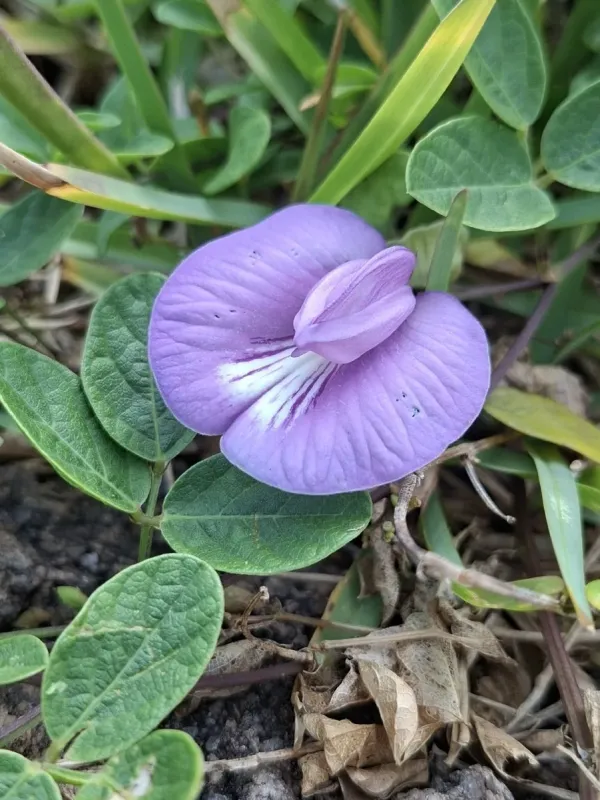
Description
Sowing dates
Centrosema virginianum is a perennial legume species native to the Americas, well-adapted to warm climates. Sowing is best timed at the onset of the rainy season to ensure sufficient moisture for germination and seedling establishment.
Optimal planting occurs from late spring to early summer when soil temperatures are consistently above 20°C, promoting rapid initial growth and better competitive capacity against weeds.
Mechanical scarification of the seeds is highly recommended before sowing to break seed coat dormancy, which significantly improves uniformity and total germination rates in the field.
Seeds should be sown at a depth of 1 to 2 centimeters depending on the soil texture. This depth ensures proper contact with moisture while allowing enough light for the initial seedling stages.
Inoculation with specific Rhizobium strains is crucial for maximizing nodulation, which enhances the nitrogen-fixing efficiency of the plant and improves overall stand health.
Growing requirements
This crop is highly versatile regarding soil types, showing excellent tolerance to low-fertility, acidic, and sandy soils where other legumes often struggle to survive.
It exhibits notable drought resistance, allowing it to perform well in regions with irregular rainfall patterns, although consistent moisture during the peak growing season increases biomass significantly.
Centrosema virginianum is a sun-loving plant that does not perform well in heavy shade. It is most effective when planted in open pastures or as a cover crop in semi-shaded plantations.
The plant thrives within a pH range of 5.0 to 7.0, making it an ideal candidate for reclaiming degraded lands and improving soil structure through its deep root system.
Maintenance requirements are low as the plant is naturally adapted to self-sustaining nitrogen cycles, reducing the need for chemical fertilizers in agricultural management.
Yield
Biomass production of Centrosema virginianum depends largely on soil nutrient levels and the intensity of grazing. It provides high-quality, protein-rich forage for cattle.
As a cover crop, it forms a dense mat that effectively suppresses weeds and prevents soil erosion, making it a valuable tool for soil conservation in tropical farming.
Seed yield can be moderate; however, the staggered flowering period requires careful monitoring for harvest to prevent high losses due to seed shattering.
The plant's ability to regenerate after grazing or cutting makes it a resilient choice for sustainable pasture systems, ensuring consistent feed availability throughout the season.
Economic value is high in integrated systems where it contributes to soil fertility while providing supplemental protein to livestock herds.
Main diseases and pests
The crop is relatively resistant to major pests but can be prone to fungal root diseases, particularly in poorly drained or waterlogged soils.
Insects such as weevils and various larvae can cause leaf damage, potentially affecting the nutritive value and growth rate if infestations reach high levels.
- Fungal root rot in waterlogged conditions.
- Leaf-feeding insects and caterpillars.
- Weed competition during the early establishment phase.
Regular agronomic monitoring and the implementation of a proper grazing rotation help in minimizing pest outbreaks and maintaining the vitality of the stand.
Integrated pest management strategies are preferred, focusing on natural biological control rather than heavy chemical usage to preserve pasture safety.
Harvesting
Harvesting for hay should occur during the flowering stage, which represents the optimal balance between biomass volume and nutritional content for livestock feed.
When used as a green manure or cover crop, the vegetation is typically slashed and incorporated into the soil before seed set to enrich the profile with organic matter.
For seed production, a staggered harvest approach or specialized equipment is necessary to capture seeds as they mature and prevent excessive losses in the field.
Post-harvest handling involves drying the seeds in shaded, ventilated areas to maintain viability and cleaning them of debris to ensure a high-quality product for future planting.
Strategic harvest management ensures that the plant regrows vigorously, extending the life cycle of the pasture and maximizing the overall return on investment.