
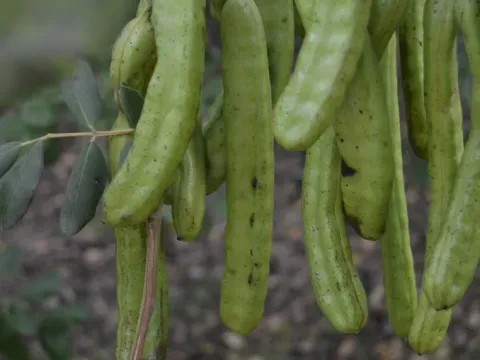
Ceratonia
Ceratonia
Ceratonia, commonly known as the carob tree, belongs to the Fabaceae family. Propagation is generally achieved through seeds or by grafting high-quality cultivars onto wild rootstocks to preserve desirable fruit traits.
What the section contains

Ceratonia
Seeds possess a very hard seed coat, making mechanical scarification or acid treatment necessary to ensure successful germination and early development.
Sowing in nursery settings usually begins in the spring when soil temperatures reach at least 20 degrees Celsius, requiring consistent moisture during the initial growth stage.
Seedlings should be transplanted to their final location once they reach a height of approximately 50 centimeters, which typically takes two to three years of nursery care.
Due to the plant's slow initial growth rate, it is crucial to handle the root system carefully during transplantation, ideally using container-grown saplings to minimize shock.
This species is highly adapted to Mediterranean climates, exhibiting extreme drought tolerance thanks to a deep, extensive taproot system that reaches water in arid conditions.
Ceratonia thrives in well-drained, lime-rich soils and displays remarkable ability to grow in rocky, nutrient-poor substrates where other fruit crops would fail to survive.
Optimal growth requires long, hot, dry summers and mild winters, as the species is sensitive to extreme frost, particularly during the young plant stage.
The tree is strictly heliophilic, meaning it requires full, direct sunlight throughout the day; shading negatively impacts both the flowering cycle and overall yield.
Avoiding waterlogging is critical; therefore, planting on slopes or well-drained terrain is essential to prevent root rot and ensure the longevity of the orchard.
Commercial production typically begins when trees reach 7 to 10 years of age, with individual trees capable of remaining productive for over a century.
Depending on the cultivar and cultivation standards, a single mature tree can yield between 50 to 200 kilograms of carob pods per season.
Flowering occurs in the autumn months, while pod maturation is a slow process that spans nearly a full year until the late summer of the following season.
Carob pods are highly valued for their sweet pulp and seeds, which are processed to produce locust bean gum—a widely used natural thickener in food and medicine.
The pulp is also processed into carob powder, a popular caffeine-free alternative to cocoa, which is rich in sugars and minerals beneficial for health.
The carob moth is the primary pest, as its larvae bore into maturing pods, consuming the inner pulp and seeds, which significantly reduces the quality and market value of the harvest.
Root rot, often caused by poor soil drainage or excessive irrigation, represents a major threat to the health and structural integrity of the trees.
Powdery mildew can affect leaves and young branches, especially in areas with higher humidity, limiting the photosynthetic capacity and vitality of the tree.
Integrated pest management strategies, including pheromone trapping and biological control agents, are recommended to maintain low populations of harmful insects.
Regular maintenance pruning and the systematic removal of fallen or diseased fruit are essential practices to reduce the spread of fungal pathogens within the orchard.
Harvesting takes place in late summer or early autumn when pods reach full maturity, turning a deep dark brown color and developing a hard, woody texture.
Traditionally, pods are harvested by shaking branches with long poles, allowing them to fall onto nets spread beneath the trees to prevent contact with the soil.
Post-harvest management involves thorough sun-drying of the pods to reduce moisture content, which is critical to prevent mold development during long-term storage.
Processing involves milling the pods to separate the seeds from the pulp; the seeds require specialized machinery due to their extreme hardness and high economic value.
Proper storage in cool, dry facilities is necessary to maintain the quality of the harvested product and prevent degradation of sugars and other active compounds.