
Southern Cercidium
Cercidium australe
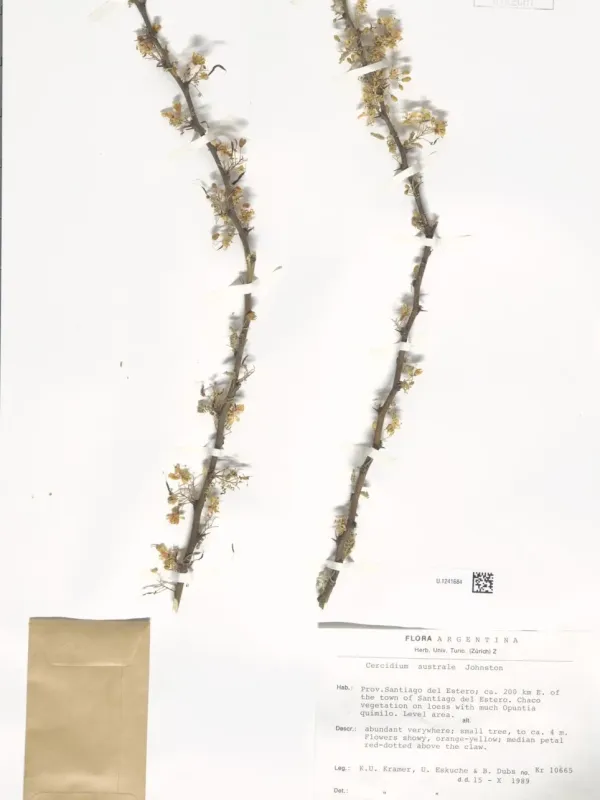
Description
Growing requirements
Southern Cercidium (Cercidium australe) is a perennial woody plant belonging to the Fabaceae family. Native to the arid regions of South America, specifically Argentina and Paraguay, it is highly adapted to environments where water availability is the primary limiting factor for plant growth.
The plant exhibits remarkable xerophytic adaptations, including the ability to photosynthesize through its green bark, which reduces water loss during extreme heat. Its deep taproot system allows it to access groundwater in harsh conditions, making it a robust survivor in desert landscapes.
Regarding climatic needs, this species thrives in regions with intense sun exposure and distinct dry seasons. It is capable of enduring high temperatures and significant diurnal temperature fluctuations, which would typically cause physiological stress in other agricultural crops.
The plant is not demanding regarding soil fertility. It performs exceptionally well in poor, sandy, rocky, or even slightly saline soils. The primary requirement is excellent soil drainage, as waterlogging is strictly contraindicated and can lead to immediate root system failure.
In terms of agricultural management, the focus is on the establishment phase. Once the plant has successfully developed its root system, it requires minimal human intervention, effectively functioning as an autonomous component of the ecosystem, which is ideal for large-scale land rehabilitation.
Main diseases and pests
The main threats to Cercidium australe are related to improper water management. Root rot, induced by excess soil moisture or poor drainage, represents the most significant pathological challenge for growers in non-native or irrigation-heavy environments.
Pests affecting this crop include various species of Coleoptera, specifically weevils, which may impact seed viability or damage the foliage of young saplings. Monitoring these populations is essential when managing nursery stocks for reforestation purposes.
Preventive strategies involve ensuring adequate spacing between trees to facilitate airflow, which reduces humidity and discourages fungal growth. Maintaining a clean cultivation site is also critical to minimize host reservoirs for potential pests.
Herbivory can pose a severe threat in the early stages of growth. Protecting young saplings with physical barriers is a standard and recommended practice to prevent damage from local wildlife, which often finds the young shoots highly palatable.
Sanitation remains the best defense against diseases. Prompt removal and destruction of any plant parts showing symptoms of decay can help prevent the spread of localized infections within the plantation, ensuring the long-term health of the crop.