
Brazilwood
Caesalpinia brasiliensis
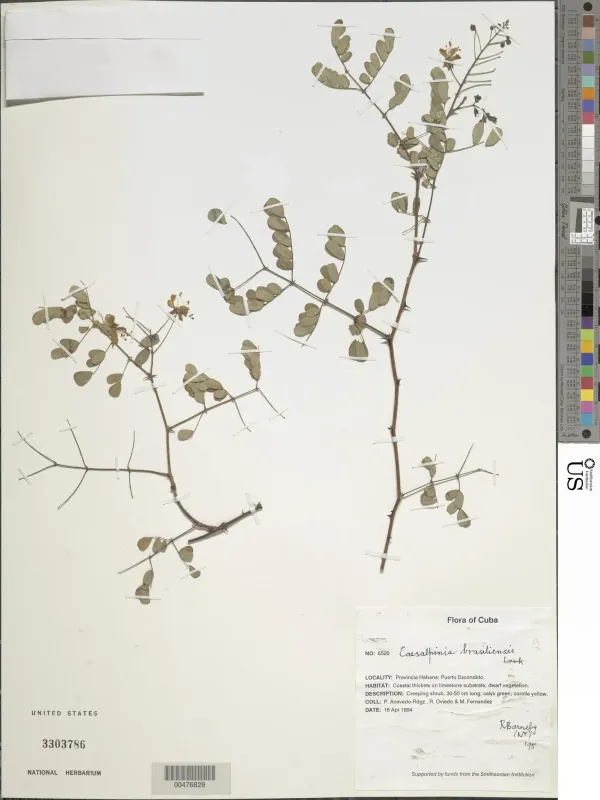
Description
Growing requirements
Brazilwood (Caesalpinia brasiliensis) is a leguminous tree species native to the tropical forests of Brazil and the Caribbean. Known for its historically significant red dye and highly durable wood, it is a plant of great economic and ecological interest.
The species requires a strictly tropical climate to thrive, characterized by consistent warmth and humidity. It is intolerant to frost and requires sheltered sites to protect the canopy from excessive wind exposure during the early stages of development.
Soil requirements for Brazilwood focus on excellent drainage and moderate fertility. It performs best in well-aerated soils where water does not pool, as the roots are susceptible to rotting if moisture levels remain excessive for prolonged periods.
Cultivation practices involve slow establishment, requiring careful monitoring of nutrient levels and pH balance. It is a slow-growing species, meaning that plantations must be managed with a long-term perspective regarding timber harvest.
The primary commercial use of the tree is the production of luxury items, most notably violin bows made from its dense heartwood, which possesses exceptional acoustic and structural properties.
Main diseases and pests
Common phytosanitary threats include soil-borne pathogens that target the root system, particularly in heavy or waterlogged soils. These pathogens can compromise the structural integrity of the tree.
Pests such as wood-boring beetles represent a significant challenge, as they penetrate the sapwood and heartwood, significantly reducing the market value of the timber produced by the plantation.
Fungal infections on leaves and stems are often associated with poor air circulation or overcrowding within the plantation. Maintaining proper spacing is essential to reduce the risk of contagion.
Integrated pest management strategies are recommended to mitigate the impact of insects without causing damage to the surrounding tropical environment.
Regular inspections and the removal of infected plant debris are standard procedures to maintain the health and vigor of the Brazilwood stand over its lengthy lifecycle.