
Brachystegia spiciformis
Brachystegia spiciformis
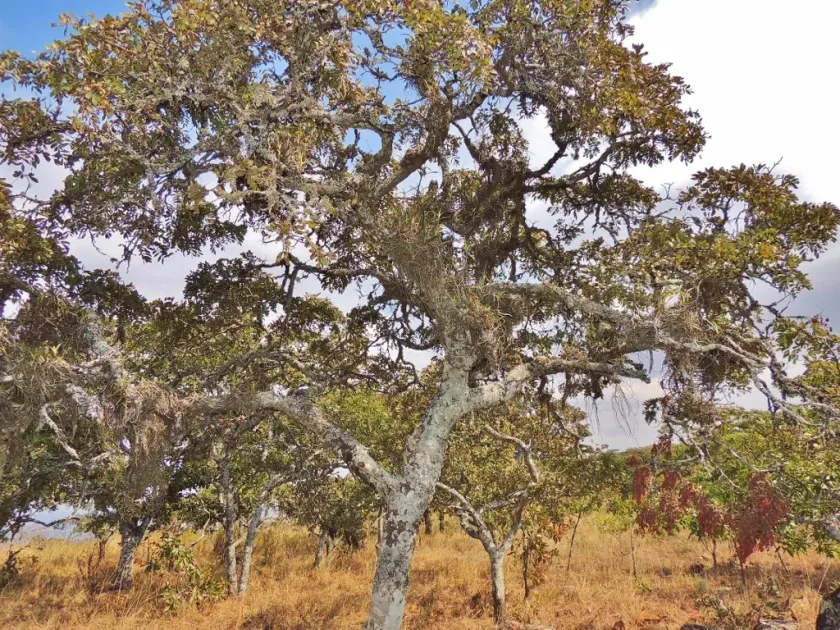
Description
Growing requirements
Brachystegia spiciformis is a prominent tree species belonging to the Fabaceae family, widely known as a key component of the Miombo woodland ecosystems in Africa.
It thrives in tropical climates characterized by distinct wet and dry seasons, adapting to average annual rainfall ranging from 700 mm to over 1000 mm.
The tree prefers well-drained, acidic, and relatively infertile soils, demonstrating a high tolerance for nutrient-poor substrates typical of the central African plateau.
Sunlight exposure is crucial for the development of these trees, as they form open-canopy forests that allow secondary vegetation to grow underneath.
Its biological resilience includes thick, fire-resistant bark, which is an evolutionary adaptation to the frequent low-intensity ground fires occurring in its habitat.
Yield
In agroforestry systems, Brachystegia spiciformis serves as a vital source of high-quality timber used for construction, tool handles, and utility poles.
It is one of the most preferred species for charcoal production due to its slow-burning characteristics and high energy content, supporting the energy needs of rural communities.
The species is highly regarded as a major nectar source for honey production, forming the backbone of the regional beekeeping industry in Miombo forests.
The nitrogen-fixing capabilities of its root system assist in soil enrichment, which is essential for maintaining fertility in areas where shifting cultivation is practiced.
Its leaves are often utilized as organic mulch, providing a source of nitrogen and carbon that benefits the productivity of adjacent agricultural crops.
Main diseases and pests
Deforestation and land conversion for industrial and small-scale agriculture represent the most significant threats to the long-term survival of the species.
Seed predation by various insects and small mammals often limits natural regeneration rates, especially in areas with fragmented forest patches.
Increased frequency of wildfires, exacerbated by human activities, can destroy seedlings and saplings before they develop sufficient bark thickness for protection.
Root rot pathogens can affect the health of the trees, particularly in waterlogged sites where soil drainage is compromised by soil compaction.
Over-harvesting of live trees for charcoal production frequently results in the loss of old-growth individuals that are essential for seed dispersal and forest health.