
Brazilian jack bean
Canavalia brasiliensis
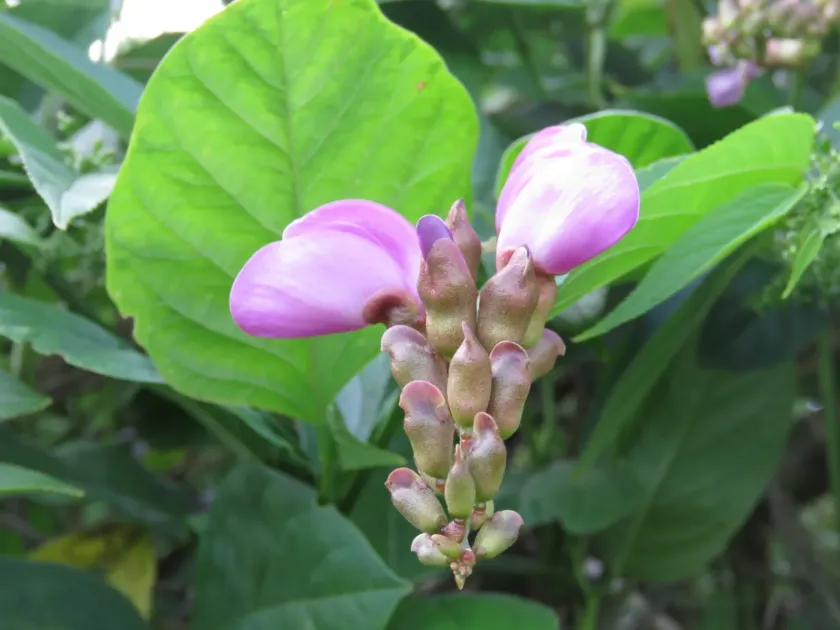
Description
Sowing dates
The Brazilian jack bean thrives in warm climates and requires soil temperatures of at least 20 degrees Celsius for successful germination and early growth.
Sowing is best performed at the onset of the wet season, which provides the necessary moisture for the rapid establishment of the root system.
Seeds should be planted at a depth of 3 to 5 centimeters in rows spaced 50 centimeters apart to ensure optimal plant density and ground cover.
A seed rate of approximately 50 kilograms per hectare is generally recommended to ensure a dense canopy that suppresses invasive weeds.
Proper field preparation before sowing, including light disking, helps create a favorable seedbed and promotes consistent emergence of the crop.
Growing requirements
This legume is highly adaptable to various soil types, ranging from sandy loams to heavier clays, though it prefers well-drained conditions.
Canavalia brasiliensis is known for its remarkable tolerance to acidic soils and its ability to thrive in environments with low nutrient availability.
The plant requires full sun exposure to achieve its full potential, as shading significantly restricts the accumulation of nitrogen-rich biomass.
It is an efficient nitrogen-fixing crop that relies on symbiotic bacteria in the soil to convert atmospheric nitrogen into plant-available forms.
Water management is crucial; while the plant is drought-resistant, it must be protected from waterlogging to prevent root system collapse.
Yield
As a green manure crop, Brazilian jack bean can produce between 5 and 9 tons of dry biomass per hectare under optimal environmental conditions.
It significantly contributes to soil organic matter content, which helps improve the water-holding capacity of the soil for the following main crop.
The nitrogen contribution from the decaying biomass is a valuable input for agricultural systems, reducing the need for synthetic fertilizers.
Seed yield varies depending on the agricultural management intensity, typically ranging between 1,000 and 1,500 kilograms per hectare.
Its high growth rate allows farmers to utilize the plant for short-term rotation cycles, maximizing the land productivity throughout the year.
Main diseases and pests
The crop is susceptible to certain foliage-feeding insects, especially during the seedling stage when plants are most vulnerable to defoliation.
Anthracnose remains a primary fungal concern, particularly in regions with high humidity levels where spores can easily spread across the field.
Root rot diseases are more prevalent in compacted or poorly drained soils, emphasizing the importance of site selection and soil structure management.
Nematode infestations can limit overall vigor, so implementing a proper crop rotation plan is essential to break the pathogen's life cycle.
Integrated pest management strategies, including the use of resistant varieties and biological controls, are recommended for sustainable production.
Harvesting
For green manure purposes, the crop should be harvested at the full flowering stage before pod development diverts nutrients away from the leaves.
Cutting the plants and incorporating them into the soil surface effectively recycles nutrients and creates a layer of mulch to prevent erosion.
Seed harvesting should occur when the pods turn brown and start to become brittle, indicating that the seeds have reached physiological maturity.
Post-harvest handling requires careful drying of seeds to prevent storage mold and ensure long-term viability for future planting seasons.
The remaining stubble provides essential organic matter that continues to benefit the soil profile long after the main harvest is completed.