
Acrocarpus fraxinifolius
Acrocarpus fraxinifolius Wight ex Arn.
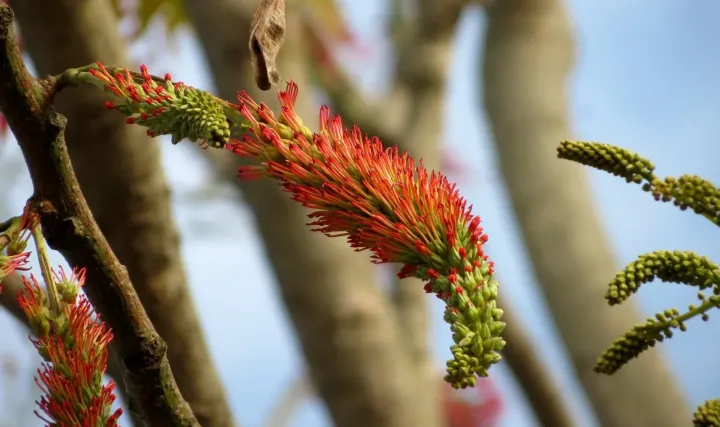
Description
Sowing dates
Propagation of Acrocarpus fraxinifolius is primarily achieved through seeds. The seeds have a hard seed coat, which necessitates pre-sowing treatments such as scarification or soaking in hot water to enhance germination rates significantly.
Seeds are typically sown in nurseries using trays or containers filled with a lightweight, well-draining substrate. Providing a warm and humid environment during the initial stages is crucial for consistent seedling growth.
Transplanting seedlings to their permanent location is recommended at the beginning of the rainy season to ensure optimal moisture levels for root establishment. Seedlings should be about 30–50 cm tall before transfer.
For forestry plantations, a spacing of 3x3 meters to 5x5 meters is standard. This layout allows enough space for the canopy to develop uniformly, which is essential for producing straight and high-quality timber.
Maintenance during the establishment phase is critical. Regular weeding around the base of the saplings is necessary to prevent competition for nutrients and sunlight, which can otherwise stunt the tree's rapid growth.
Growing requirements
Acrocarpus fraxinifolius, commonly known as Pink Cedar, is a large deciduous tree belonging to the Fabaceae family. It is native to tropical and subtropical regions of Asia, where it thrives in humid environments.
The species is highly light-demanding. To maximize growth and form a straight trunk, it requires full exposure to sunlight. In shade, the trees tend to grow spindly and are more susceptible to structural issues.
Soil requirements involve deep, fertile, and well-drained conditions. While the tree can tolerate a variety of soil types, it performs best on loamy soils with a slightly acidic to neutral pH level.
Climate conditions should be tropical with high annual rainfall (1000–3000 mm). The tree is extremely sensitive to frost and cold winds, which limits its cultivation to tropical and low-altitude subtropical zones.
As a legume, it has the ability to fix atmospheric nitrogen through a symbiotic relationship with bacteria in its root nodules. This feature contributes to soil enrichment, making it an excellent candidate for intercropping.
Yield
The economic yield of Acrocarpus fraxinifolius is focused on its valuable timber. It is widely used in the production of high-quality furniture, plywood, interior paneling, and general construction materials.
It is recognized as one of the fastest-growing tree species in the tropics, often reaching harvestable size in just 20 to 30 years. This rapid production cycle makes it a favorite for sustainable timber plantation management.
Beyond timber, the species is extensively used in agroforestry as a shade tree for coffee and tea plantations. It effectively modifies the local microclimate, providing shelter from direct sunlight and wind.
The biomass production of this tree is substantial, and in some managed systems, it can also provide auxiliary benefits such as fodder from its foliage and soil improvement through leaf litter decomposition.
Harvesting strategies involve selecting mature trees that have reached the desired diameter for timber processing. Careful planning ensures that the ecosystem remains productive after the selective logging of mature stands.
Main diseases and pests
The primary threats to Acrocarpus fraxinifolius include stem-boring insects, which can inflict significant damage to the heartwood. These pests are a major concern in commercial plantations, necessitating vigilant monitoring.
Fungal diseases are a risk in areas with high humidity and poor air circulation. Managing the density of the stand and conducting regular pruning of the lower branches help to mitigate the spread of these pathogens.
Young trees are susceptible to grazing by wildlife and rodents. In the early stages of a plantation, it is often necessary to install tree guards to protect the tender bark and shoots from being consumed.
Poor soil drainage leading to waterlogging can result in root rot, which is often fatal. Careful site selection, focusing on topography and soil permeability, is the most effective preventative measure.
Nutrient deficiencies, particularly in degraded soils, may lead to chlorosis and stunted growth. Periodic soil analysis and the application of balanced fertilizers can help maintain tree health during the peak growth years.