
Chinese tallow tree
Sapium sebiferum (L.) Roxb.
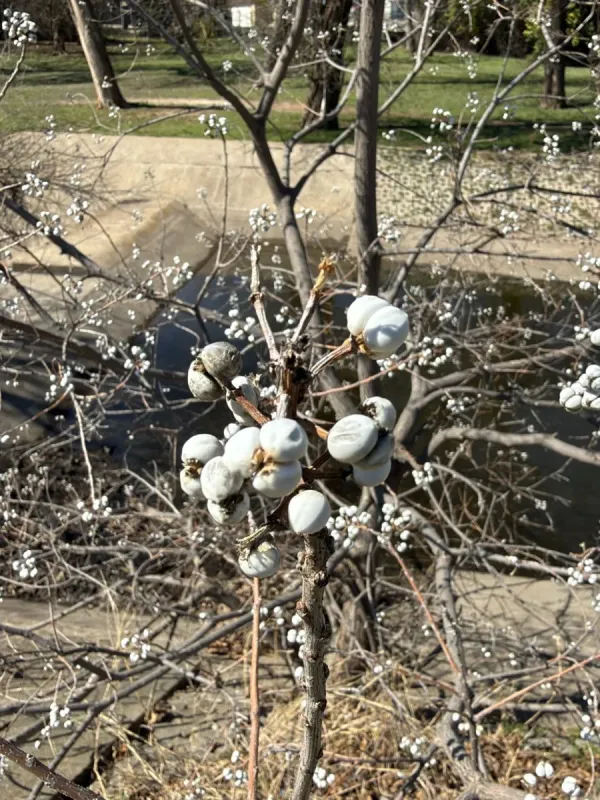
Description
Sowing dates
The propagation of the Chinese tallow tree, belonging to the Euphorbiaceae family, is typically achieved through seeds or vegetative cuttings. The optimal sowing time is during the spring when soil temperatures have consistently risen, ensuring uniform germination.
Seeds require a period of stratification to improve germination rates and uniformity. In commercial operations, two-year-old nursery saplings are often transplanted to permanent locations, maintaining appropriate spacing between rows to facilitate proper canopy development and future maintenance.
Planting material must be selected based on the specific climatic zone, paying close attention to the sensitivity of young trees to frost during their first growing season. Utilizing high-quality, certified seeds is a fundamental requirement for ensuring the long-term productivity of the plantation.
In regions with distinct seasonal cycles, sowing should occur immediately after the threat of late-season frosts has passed to minimize cold stress. Agronomists recommend strict adherence to row spacing configurations that allow for the mechanization of soil cultivation and weed control.
Biologically, the Chinese tallow tree is characterized by rapid growth, which enables it to establish a robust root system and canopy within a relatively short period, provided that appropriate initial planting techniques are employed. This adaptability is key to the successful establishment of the crop.
Growing requirements
The Chinese tallow tree is a heat-loving species with a natural range encompassing tropical and subtropical regions of China, Japan, and Vietnam. For optimal vegetative growth, the plant requires a long frost-free season and a high accumulation of active temperatures.
The crop is relatively undemanding regarding soil conditions; however, peak productivity is achieved on deep, well-drained alluvial or loamy soils. The species is noted for its remarkable tolerance to temporary waterlogging, which distinguishes it from many other industrial crops.
Possessing high ecological plasticity, the tree is capable of growing on saline or eroded soils where other agricultural crops struggle to survive. This trait makes it an extremely valuable species for land reclamation and soil stabilization projects.
Optimal light exposure is a critical factor for the Chinese tallow tree, as it is highly photophilous; excessive shading significantly reduces seed production. Open sites that are protected from severe winds provide the most suitable environment for large-scale industrial plantations.
Irrigation management must be balanced, particularly during the flowering and fruit-setting stages. While the tree can withstand brief periods of drought, consistent moisture levels significantly enhance the yield of both the outer tallow wax and the seed oil per hectare.
Yield
The yield of the Chinese tallow tree is directly influenced by the maturity of the plantation and the consistency of agronomic care. Mature trees are capable of producing stable annual harvests for several decades, making them a long-term economic investment for farmers.
The primary commercial product is the seed, which is coated in a layer of solid vegetable fat, commonly known as Chinese tallow. Total raw material output can reach significant quantities when canopy pruning is performed correctly and competition from weeds is effectively suppressed.
Average productivity is determined by the fat content within both the exocarp and the seed kernel. Advanced extraction technologies allow processors to recover both the exterior wax and the high-quality oil from the kernel, maximizing the overall economic output.
The fruit maturation process is typically staggered, necessitating regular monitoring of the capsules on the branches to determine the ideal harvest window. The application of micronutrient fertilizers during the budding stage has been shown to stimulate fruit set effectively.
Experienced producers maximize yields by selecting high-producing clones that are bred for increased fat content. As trees age, periodic rejuvenation pruning is essential to maintain a high level of fruit production and prevent yield stagnation in older plantations.
Main diseases and pests
The Chinese tallow tree is generally considered a resilient species; however, in dense plantation environments, it can be susceptible to specific insect pests. Leaf-eating caterpillars represent the most significant threat, as they can substantially reduce the tree's photosynthetic capacity.
Fungal diseases are common in conditions of high humidity and poor air circulation within the canopy. Regular sanitary pruning and thinning of the branches are effective preventive measures that minimize the risk of pathogen spread and spore development.
Root rot issues may arise in heavy or poorly drained soils where water stagnation occurs. Adherence to strict crop rotation practices and careful site selection are the primary defense strategies to ensure the long-term health of the plantation.
Leaf spotting, often caused by powdery mildew or rust fungi, may appear under unfavorable environmental conditions. In cases of significant outbreaks, the application of fungicides, in accordance with regulatory guidelines for industrial crops, is recommended to protect the trees.
Ongoing monitoring of the phytosanitary status of the plantation is vital, as certain pests may act as vectors for viral diseases. Prompt removal and destruction of infected plant material are necessary to prevent the epidemic spread of pathogens throughout the orchard.
Harvesting
Harvesting the Chinese tallow tree is a labor-intensive process that requires precision in identifying the peak maturity stage. Fruits are harvested once the capsules begin to split open, revealing the seeds covered in their distinctive white, waxy coating.
Traditionally, harvesting is conducted by hand, although modern plantations are increasingly adopting specialized mechanical shakers to dislodge the fruit. This process requires careful operation to avoid causing physical damage to the bark and scaffold branches of the trees.
Post-harvest, the fruits must be dried in the open air or using artificial dryers to prevent spoilage and the development of mold. Reducing moisture content is a critical step for ensuring the efficient mechanical separation of the wax from the kernel during subsequent processing.
The cleaning process involves mechanical separation techniques designed to isolate the valuable wax from the hard shell of the seed kernel. The purity of the harvested raw material directly influences its market grade and final price in the technical fat market.
Storage of the harvested crop must occur in dry, well-ventilated facilities that are protected from rodents and other pests. Proper logistics and storage management are essential for preserving the quality and stability of the fatty acids within the tallow over extended periods.