
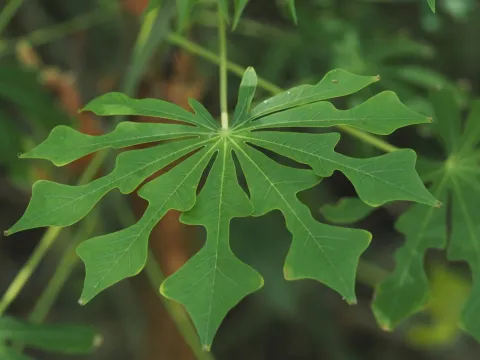
Graham's cassava
Manihot grahamii
Graham's cassava (Manihot grahamii) is a woody shrub or small tree belonging to the Euphorbiaceae family. It is a distinct species within the Manihot genus, often recognized for its unique foliage and structural elegance in garden settings.
What the section contains
Graham's cassava
Native to South America, particularly regions of Argentina, Paraguay, and Brazil, this plant thrives in warm climates. It is highly adapted to sunny environments and is known for its ability to withstand varying degrees of light intensity.
The plant performs best in well-drained, fertile soils with a pH ranging from slightly acidic to neutral. Ensuring proper drainage is critical, as stagnant water can lead to root system decay, which is a common vulnerability for this species.
In terms of temperature, Graham's cassava is relatively hardy compared to its tropical cousins, showing some resilience to minor temperature drops, although it remains primarily a warm-season grower.
The botanical structure is characterized by deeply lobed, palmately compound leaves and thin, flexible stems that can grow rapidly throughout the active vegetation season given adequate nutrients.
The economic and practical use of Manihot grahamii is primarily concentrated in ornamental horticulture rather than large-scale food production.
While the plant develops root tubers, they are not typically harvested as a primary food source, as the species is valued more for its rapid growth rate and aesthetic appeal in landscape design.
It is frequently utilized in botanical gardens and private collections to create a tropical atmosphere, providing excellent vertical structure and texture due to its fast-growing canopy.
The plant is highly responsive to pruning, which allows for the creation of various shapes or maintaining a desired size, making it a versatile tool for gardeners and landscape architects.
Research into the secondary metabolites of the plant continues, suggesting potential future interest in chemical or biological applications of its parts beyond mere landscaping.
The main threats to Graham's cassava come from environmental stressors and common agricultural pests that target members of the Euphorbiaceae family.
Spider mites are a significant concern during hot and dry periods, often colonizing the underside of leaves and causing discolouration or leaf drop if not managed correctly.
Whiteflies can also cause issues by feeding on plant sap and potentially transmitting viral pathogens that affect the overall vigor of the shrub.
Root rot pathogens become a threat when irrigation protocols are not followed, specifically when the soil stays waterlogged for extended periods during the growing season.
- Monitor for signs of pest infestations during the peak of summer.
- Ensure proper spacing to allow sufficient airflow between plants.
- Apply balanced organic fertilizers to maintain overall plant health.