
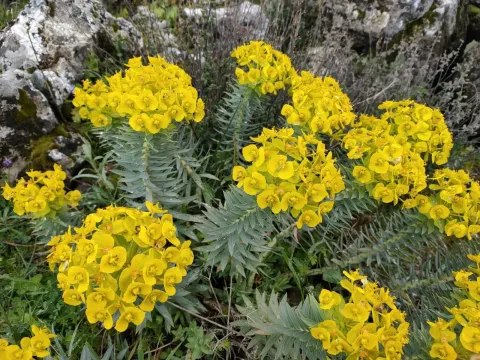
Gopher spurge
Euphorbia rigida
Euphorbia rigida, commonly known as Gopher spurge, is a perennial succulent species belonging to the Euphorbiaceae family. It is native to the Mediterranean region, where it has evolved to thrive in dry, rocky, and inhospitable terrains.
What the section contains
Gopher spurge
The plant is highly valued for its drought tolerance and architectural beauty. It requires well-drained soil, preferably stony or sandy, to prevent root rot, which is the primary cause of plant loss in non-native environments.
Full sun exposure is a mandatory requirement for this species. When grown in shaded areas, the plant tends to become leggy and fails to produce the vibrant, lime-green floral bracts that are characteristic of the species in spring.
Botanically, it features stiff, upright stems covered with fleshy, glaucous leaves arranged in a spiral pattern. This structure allows the plant to efficiently store water and survive extended periods of low rainfall and high temperatures.
In terms of agricultural and horticultural use, Gopher spurge is widely utilized for xeric landscaping, rock gardens, and erosion control on slopes. Its low-maintenance nature makes it a popular choice for sustainable gardening projects.
Fungal diseases are the most significant threats to Euphorbia rigida, primarily root rot induced by waterlogging. Improving soil drainage and air circulation are the most effective strategies for preventing these fatal conditions.
Pests such as aphids and spider mites can occasionally affect the plant, particularly in stressed individuals or those kept in stagnant air conditions. Regular monitoring of the foliage is recommended to catch infestations early.
It is critical to handle this plant with caution, as its milky sap contains toxins that cause skin irritation and eye damage. Protective gloves and long sleeves should always be worn when pruning or transplanting the specimens.
Disease management involves selecting the right site and avoiding overhead irrigation. If infection occurs, removing the affected parts and applying appropriate fungicides can sometimes save the plant, though environmental adjustment is more effective.
Managing the plant population also requires careful consideration of its invasive potential in certain climates. Gardeners should ensure that seeds are contained and do not escape into naturalized areas where the species might outcompete native flora.