
Herniaria-leaved spurge
Euphorbia herniariifolia
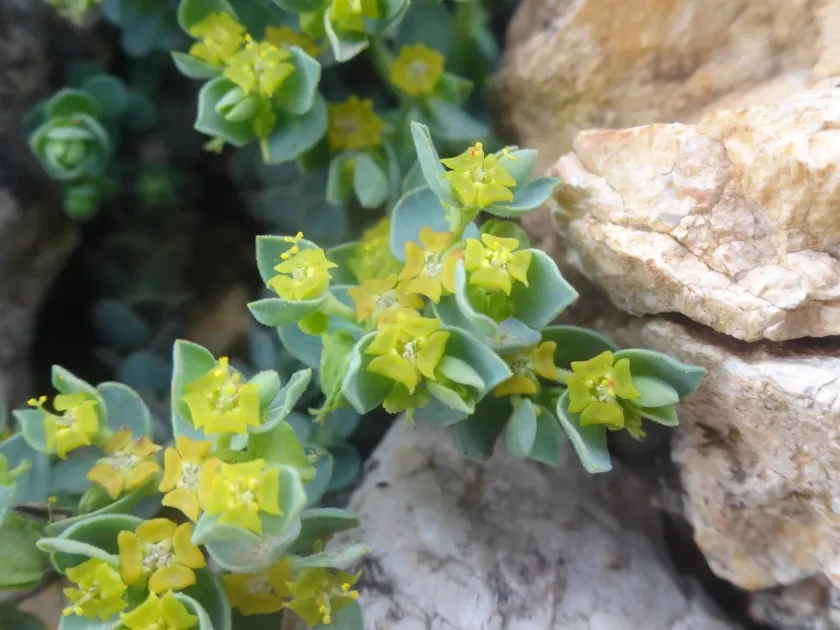
Description
Growing requirements
The Herniaria-leaved spurge (Euphorbia herniariifolia) is a member of the Euphorbiaceae family. This perennial herb originates from the mountainous regions of the Balkans and Asia Minor, where it adapts to harsh, rocky landscapes.
Botanically, it forms low, dense mats of creeping stems. Its leaves are small and leathery, an evolutionary adaptation that allows the plant to thrive in nutrient-poor, high-drainage environments where water retention is critical.
For successful growth, this culture requires extremely well-drained soil, such as sandy or gravelly mixtures. It is intolerant of waterlogged soil conditions, which can quickly lead to root decay and the death of the plant.
It prefers full sun exposure and is highly drought-tolerant. While it exhibits good resilience against temperature fluctuations, it may require winter protection in extremely cold regions to prevent damage from frost heaving in exposed ground.
The plant is primarily used in ornamental horticulture, specifically for rock gardens, crevice planting, and as a low-maintenance groundcover for slopes that are otherwise difficult to cultivate with traditional plants.
Main diseases and pests
The primary threats to the health of this spurge are fungal pathogens, particularly those causing root rot. These diseases are almost exclusively triggered by improper irrigation management or poor drainage in the garden beds.
Spider mites are the most common insect pests associated with this plant, especially during hot, dry summer periods. Preventive measures include regular inspection and maintaining plant vigor through appropriate site selection.
Powdery mildew can affect the foliage during periods of high humidity and poor air circulation. To manage this risk, it is essential to provide adequate spacing between individual plants to promote airflow around the canopy.
Slugs and snails may attack young shoots during the wet spring months. Applying a barrier of crushed gravel around the base of the plant can serve as an effective deterrent without the need for heavy chemical application.
Overall, the maintenance of this species centers on avoiding environmental stress. By replicating the dry, rocky conditions of its native habitat, growers can minimize susceptibility to pests and diseases significantly.