
Hopetown euphorbia
Euphorbia hopetownensis
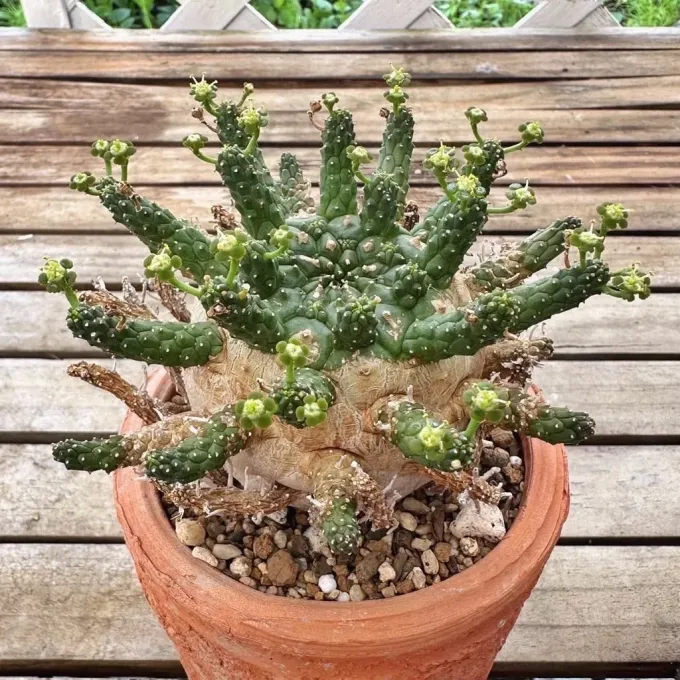
Description
Sowing dates
Hopetown euphorbia is a crop that necessitates careful attention to planting windows, aligning sowing activities with seasonal shifts in moisture availability in its native range.
To ensure high germination rates, seeds should be sown into well-prepared seedbeds where soil temperature remains consistently between 18 and 22 degrees Celsius.
Shallow planting depths of approximately 1 to 2 centimeters are recommended to allow the fragile seedlings to emerge quickly without expending excessive energy reserves.
Row spacing should be managed to facilitate mechanical or manual weeding, preventing competition for resources between the young plants and native weeds.
Seedbed preparation should involve minimal tillage to protect the soil structure, which is vital for the long-term sustainability of this crop in arid environments.
Growing requirements
Belonging to the Euphorbiaceae family, this species is uniquely evolved for xeric conditions, thriving where other agricultural plants would perish due to water scarcity.
Soil requirements focus on excellent drainage and aeration, as the root system is highly sensitive to hypoxia and fungal rot triggered by standing water.
Full sun exposure is a non-negotiable requirement for Hopetown euphorbia, as it relies on intense light to drive its physiological processes and ensure proper growth.
The ideal soil profile for this crop consists of sandy or rocky substrates with a neutral to slightly acidic pH, mirroring its wild habitat conditions.
Standard agronomic practices for this crop emphasize moderate fertilization, as excessive nutrient loading can lead to unbalanced growth and increased susceptibility to pests.
Yield
Yield potential of Euphorbia hopetownensis is largely determined by the availability of cumulative solar energy and the absence of competition during the critical growth phase.
Under optimal conditions, the biomass production can be significant, making it a viable candidate for specialized technical applications or essential oil extraction.
Harvest timing is a key factor in yield quality, as the accumulation of secondary metabolites typically peaks during specific stages of the plant's life cycle.
Research suggests that yield stability is improved through precision agriculture techniques that monitor soil moisture levels to provide supplemental irrigation only when strictly necessary.
Proper post-harvest handling, including drying techniques, is essential to maintain the structural integrity of the harvested material and prevent quality degradation.
Main diseases and pests
Fungal pathogens represent the primary biological threat, particularly root rots that proliferate when soil management protocols are neglected.
Pest pressure is generally low but can increase in dry conditions, with spider mites being a common concern that can cause significant leaf chlorosis if left untreated.
Integrated Pest Management (IPM) strategies are highly recommended to balance the need for crop protection with the environmental sensitivity of the arid ecosystem.
Regular surveillance programs are crucial for detecting early signs of infestations, allowing for targeted interventions rather than broad-spectrum chemical applications.
Crop rotation practices should be strictly followed to break the life cycles of soil-borne pathogens that thrive in the root zone of Euphorbiaceae species.