
Bleeding heart tree
Homalanthus populifolius
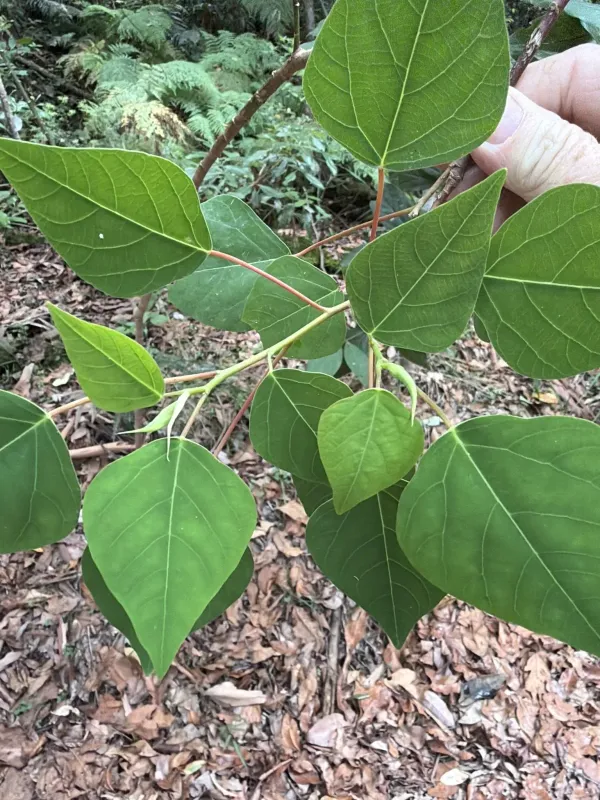
Description
Growing requirements
The Bleeding heart tree, scientifically known as Homalanthus populifolius, is a distinctive member of the Euphorbiaceae family. It is native to the rainforest margins of eastern Australia and various islands in the South Pacific.
This species thrives in warm, humid climates and prefers locations with partial shade. While it can tolerate some sun, it is best suited to an environment that mimics its natural forest floor or understory habitat.
Cultivation requires well-draining, fertile soil rich in organic matter. Maintaining a consistent moisture level in the substrate is crucial for growth, although the plant should never be left sitting in waterlogged conditions.
As for agricultural practices, it is essential to protect young specimens from frost and drying winds. Proper spacing in landscape design ensures adequate airflow, which is critical for reducing humidity-related stress on the leaves.
In addition to its use in ornamental gardening, this plant is valued for its rapid growth rate and attractive heart-shaped leaves that turn bright red before falling, adding significant aesthetic value to native plantings.
Main diseases and pests
Pests commonly associated with this plant include mealybugs and aphids, which tend to congregate on young shoots. Integrated pest management, including regular inspection and horticultural oils, is highly effective.
Fungal pathogens such as powdery mildew or leaf spot can affect the plant if ventilation is insufficient. Ensuring proper space between plants and avoiding overhead irrigation during cooler periods can minimize these risks.