
Hooked Euphorbia
Euphorbia hamata
Description
Growing requirements
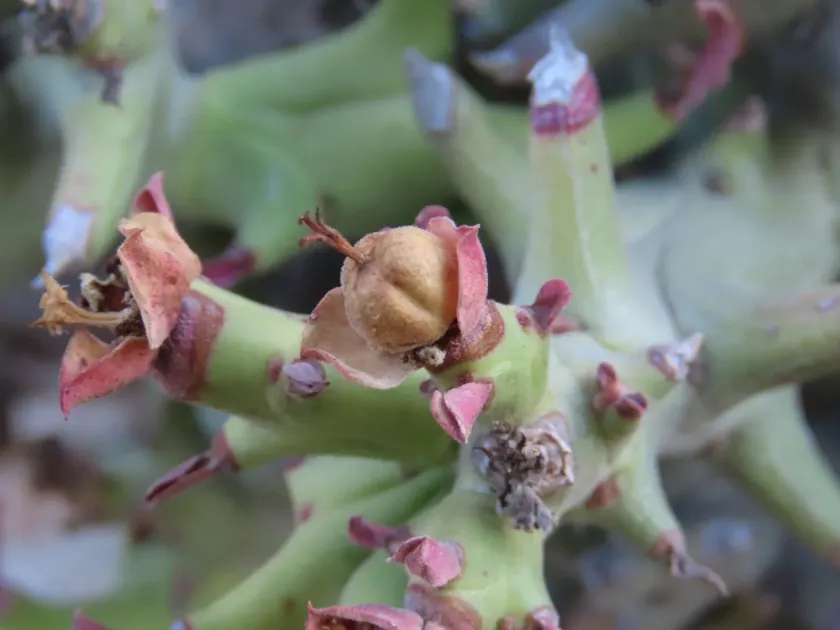
Hooked Euphorbia (Euphorbia hamata) is a distinctive member of the Euphorbiaceae family. This shrubby succulent is well-known for its unique structural habit and its specialized ability to thrive in extremely arid environmental conditions.
Native to the arid regions of Southern Africa, this species has evolved as a xerophyte. It is highly valued in horticulture for its durability and peculiar morphological traits that make it a standout specimen in specialized collections.
The primary soil requirement for successful growth is excellent drainage. The plant thrives in coarse, rocky, or sandy substrates where water cannot accumulate. Poorly drained soil will lead to rapid root rot and failure of the specimen.
It requires maximum sun exposure to maintain its compact growth form and structural integrity. In terms of temperature, it prefers warm conditions and is sensitive to frost, which can cause significant damage to its succulent tissues.
Cultivation practices focus on long periods of drought, mimicking its natural habitat. Watering should be sparse even during the active growing season, and the plant should be kept almost completely dry during the dormant winter months.
Main diseases and pests
The most significant threat to Euphorbia hamata is opportunistic fungal pathogens such as Pythium and Phytophthora. These are almost exclusively associated with over-irrigation and stagnant environmental conditions.
Pest management involves regular monitoring for sucking insects like mealybugs, which tend to hide in the joints of the succulent stems. Proper air circulation and controlled humidity are the best preventative measures against most biological threats.